
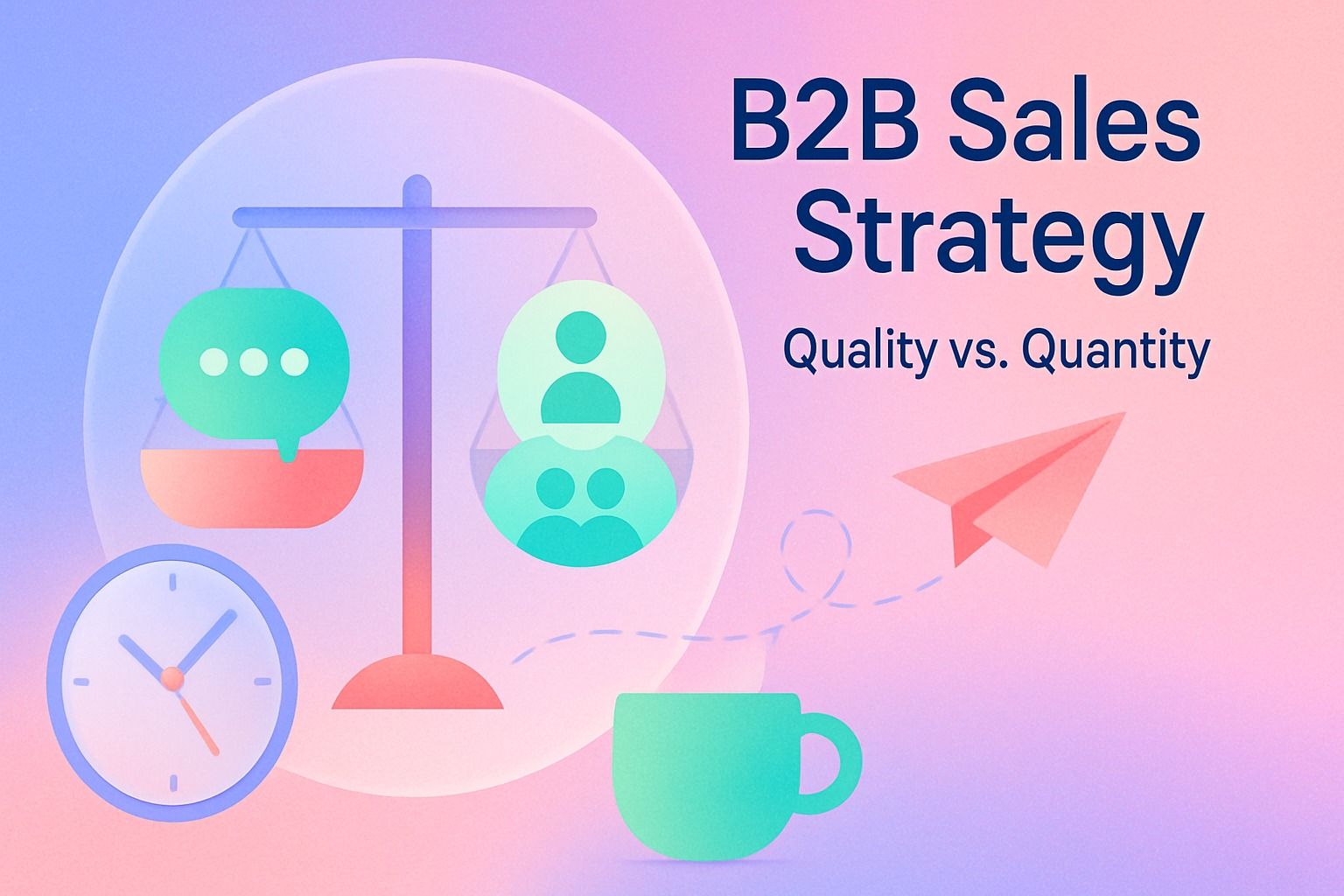
B2B Outreach: Quality vs. Quantity on LinkedIn
If your B2B sales strategy depends on sending as many cold messages as possible, you're probably optimizing the wrong variable.
For most teams, personalized outreach converts better than generic outreach, but only when the personalization is relevant, fast to scan, and tied to a clear reason for reaching out. The goal is not writing a mini-essay for every prospect. The goal is sending enough high-quality messages consistently to create pipeline without sounding copied and pasted.
A practical rule: start with a volume you can truly personalize. For many LinkedIn-led outbound motions, that means prioritizing fewer, better messages over a high-volume generic blast.
In other words: quantity matters, but quality is what makes quantity worth sending.
If you want a repeatable way to keep that quality high, Dynal can help as an AI LinkedIn agent for structured drafting and outreach shaping with brand context. It is useful when you want consistency without turning every message into a one-off rewrite.
- Personalization usually beats generic outreach when it is specific and concise.
- The best outreach feels researched, not over-written.
- You do not need deep custom writing for every lead; you need smart personalization layers.
- Scaling works best when your message structure stays consistent and only the relevant parts change.
Why quality beats raw quantity in a modern B2B sales strategy
A lot of outreach advice treats this like a simple tradeoff:
- send 20 very personalized messages, or
- send 200 generic ones.
But strong personalized outreach is not about choosing one extreme. It is about finding the point where:
- your message still feels human,
- your targeting is tight,
- your offer is relevant, and
- your team can repeat the process weekly.
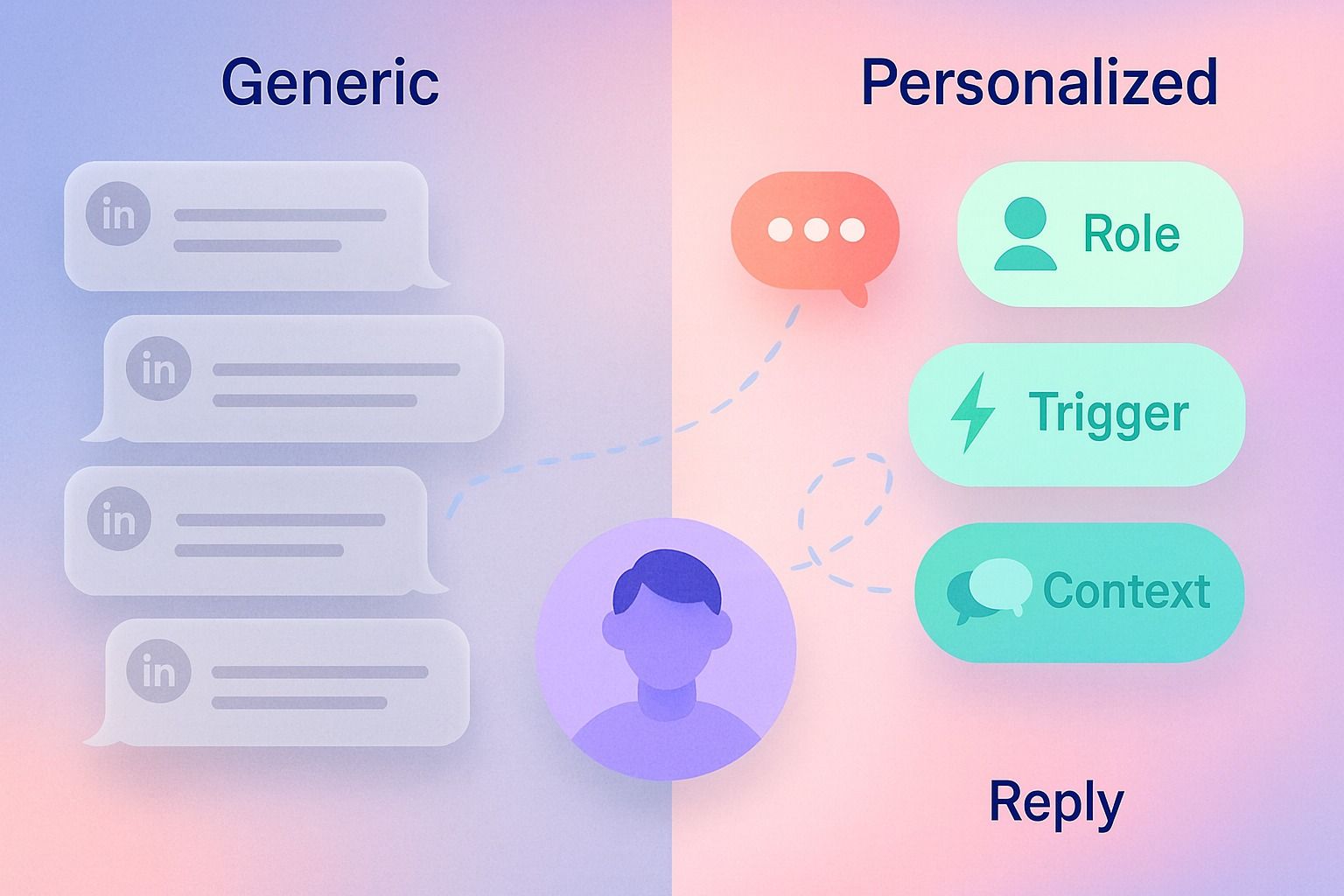
On LinkedIn, prospects can spot a generic message instantly. Most generic DMs fail for obvious reasons:
- they mention no real context,
- they ask for too much too early,
- they sound identical across industries and roles,
- they lead with the seller instead of the buyer.
Meanwhile, a personalized message does not need to be long. It just needs to answer the prospect's silent question:
"Why are you messaging me specifically?"
That is the core of a better B2B sales strategy.
How many personalized cold DMs should you send?
There is no universal number that fits every market, but there is a practical benchmark:
Send only as many personalized cold DMs as you can maintain at a high standard, every week.
For many individual sellers or lean teams, that often looks like:
- 10 to 30 highly personalized DMs per day if you are researching each lead manually
- 30 to 60 lightly personalized but still relevant DMs per day if you have a clear segment, repeatable messaging, and a strong workflow
- fewer than that if your deal size is high and each account deserves deeper research
If you are sending hundreds of messages that all sound the same, you are not really scaling outreach. You are scaling irrelevance.
Use this simple volume test
Ask yourself:
- Can I explain why each prospect is a fit?
- Does each message include a believable reason for contact?
- Would I be comfortable receiving this message myself?
- Can I follow up thoughtfully if they reply?
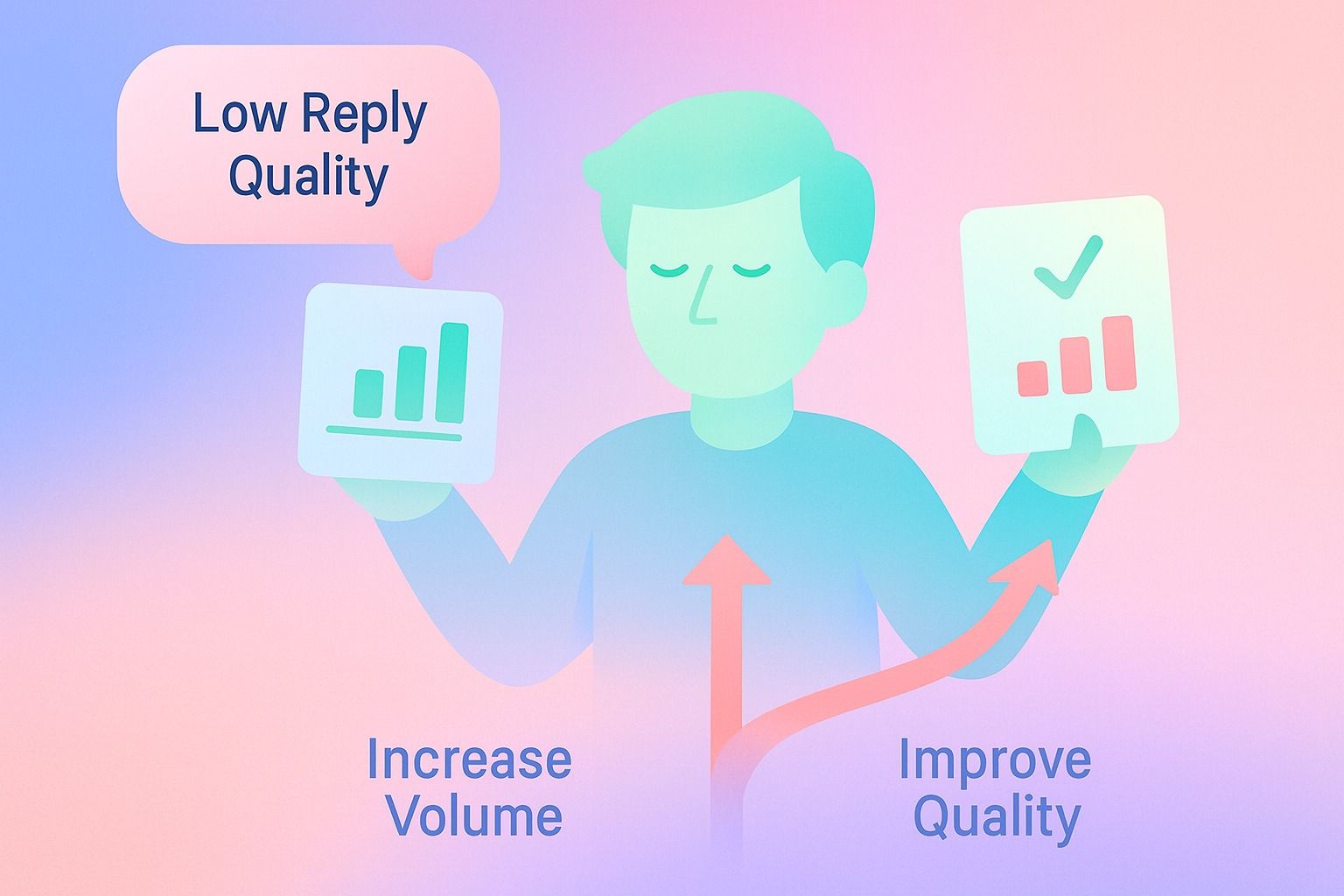
If the answer is no, reduce volume before increasing it.
If you're tightening your process before scaling sends, Dynal may be worth a look as an AI LinkedIn agent for organizing draft variations and brand context in one place. That can make it easier to improve relevance before you add more volume.
Does personalized outreach actually convert better than generic outreach?
In most B2B contexts, yes.
Not because personalization is magical, but because it improves the fundamentals:
- higher relevance: the offer matches the role, company stage, or problem
- better attention: the opener gives the reader a reason to keep going
- stronger trust: the message feels considered rather than automated
- clearer positioning: you sound like you understand their world
Generic outreach can still work in narrow situations, especially when:
- your audience is extremely well segmented,
- your value proposition is immediately obvious,
- the message is short and direct,
- the ask is very low friction.
But even then, the best-performing "generic" outreach usually is not fully generic. It still reflects:
- the buyer category,
- a known pain point,
- a role-specific goal,
- or a shared context.
So the better question is not "personalized or generic?" It is:
What level of personalization is enough to feel relevant without slowing the team down too much?
What makes a B2B outreach message feel personalized without taking too much time?
Good personalization is usually built from small, credible signals, not huge amounts of research.
The fastest personalization angles
You do not need all of these in one message. Usually one or two is enough:
- their role and likely priority
- recent company news or hiring activity
- a post they shared or commented on
- a common industry challenge
- a specific use case tied to their function
- a mutual community, event, or connection
A message feels personalized when it includes:
- a specific reason for the outreach
- language that matches the buyer's context
- a relevant pain point or desired outcome
- a low-pressure next step
A message feels fake-personalized when it includes:
- empty compliments
- irrelevant flattery
- obvious template tokens
- forced references to something trivial
- too much detail that feels stalker-ish
For example:
Weak:
"Hi Sarah, I came across your profile and was really impressed by your amazing background. I'd love to connect and share how we help companies grow."
Better:
"Hi Sarah, noticed you're leading demand gen at a fast-growing B2B SaaS team. Reaching out because teams in that stage often struggle to keep LinkedIn outreach personal once volume picks up. Happy to share a simple framework if useful."
The second message is still short. But it feels more personal because it is anchored in role and likely challenge.
The best balance between quantity and personalization in LinkedIn outreach
The sweet spot is usually structured personalization.
That means you keep the same message framework, but swap in relevant context by segment.
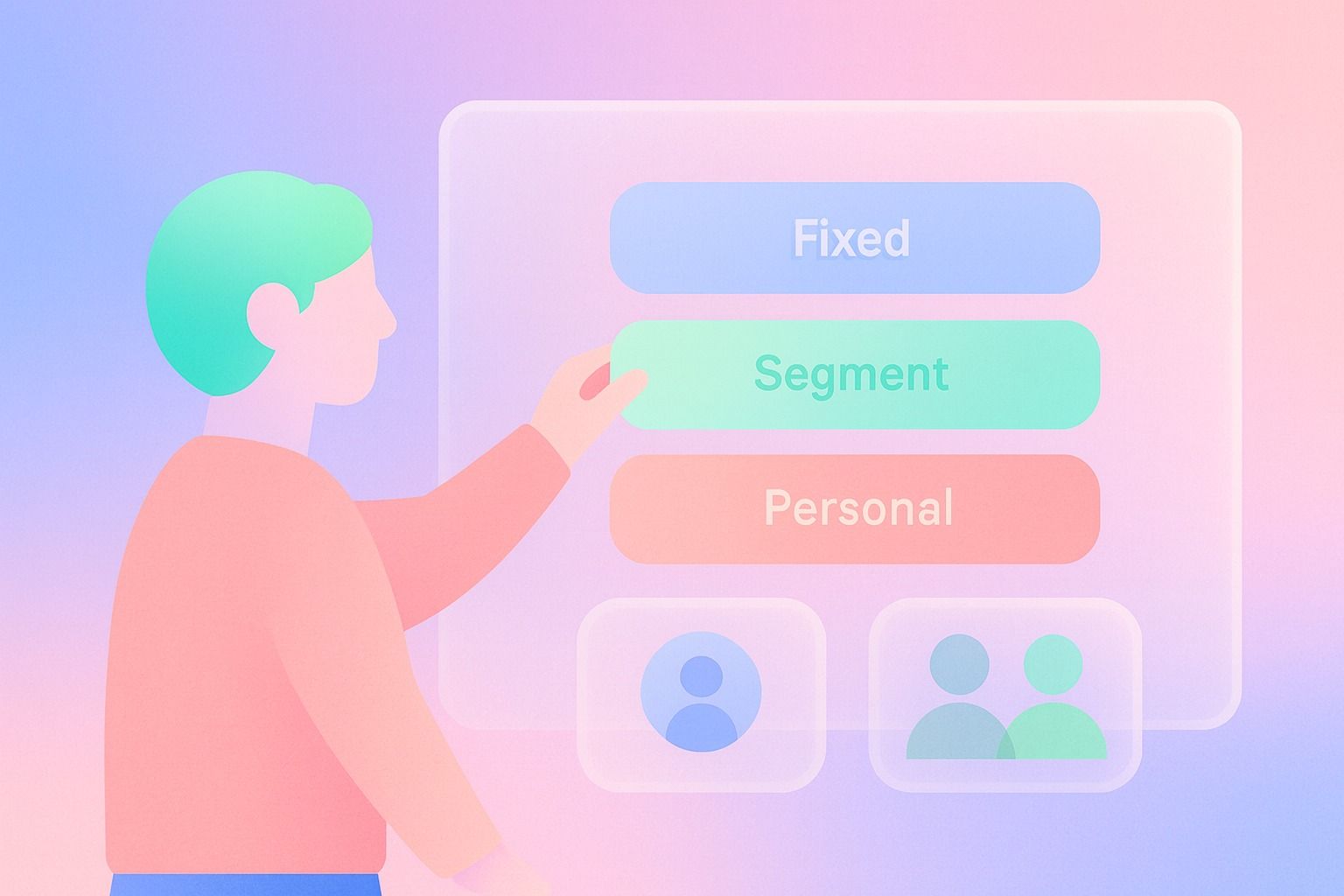
Think of outreach in 3 layers:
1. Fixed layer
These parts stay mostly the same:
- your core positioning
- your offer category
- your call to action
- your overall message length
2. Segment layer
These change by audience group:
- job function
- industry
- company size
- maturity stage
- common pain point
3. Individual layer
These are light custom touches:
- recent post
- initiative
- hiring trend
- shared context
- specific trigger event
That kind of structured personalization is exactly where an AI LinkedIn agent can fit into the workflow. Dynal helps teams keep the same message structure while adapting the parts that need to change.
This is how you scale personalized outreach without writing every DM from scratch.
A step-by-step process to scale personalized outreach without losing quality
Here is a practical system you can use.
Step 1: Define narrow segments
Do not write one message for everyone.
Start with a clear segment such as:
- SaaS founders hiring their first sales team
- heads of marketing at B2B software companies
- agency owners selling high-ticket services
- consultants building authority on LinkedIn
The narrower the segment, the easier it is to personalize fast.
Step 2: Identify one core pain point per segment
Each segment should map to one dominant problem.
Examples:
- low reply rates from generic LinkedIn outreach
- inconsistent founder-led content
- difficulty turning expertise into pipeline
- weak positioning in outbound messaging
Step 3: Build one core message per segment
Create a reusable structure:
- relevant opener
- reason for reaching out
- problem or opportunity
- low-friction CTA
Template:
"Hi [Name], saw you're [role/context]. Reaching out because [segment-specific challenge]. We've been thinking a lot about how teams handle [problem] without losing quality. Open to a quick exchange on what is working?"
Step 4: Add one personal signal
Now layer in a small custom detail.
Examples:
- "noticed your team is hiring AEs"
- "saw your post on outbound quality"
- "looks like you're expanding into enterprise"
- "noticed you work with multiple client accounts"
Step 5: Keep the CTA light
The first message should not demand a full demo.
Better CTAs:
- "Worth sharing a short framework?"
- "Open to comparing notes?"
- "Happy to send over a few ideas if useful."
- "Interested in a quick chat next week?"
Step 6: Review your messaging quality weekly
Check:
- acceptance rate
- reply rate
- positive reply rate
- booked conversations
- common objections
If reply volume is low, do not just send more. Improve segment fit or message relevance first.
Outreach checklist: quality control before you hit send
Use this quick checklist for every LinkedIn outreach campaign.
Targeting checklist
- Is this a clearly defined B2B segment?
- Do I understand the likely pain point of this role?
- Is my offer relevant to this audience?
- Am I reaching out because of fit, not just because they exist?
Message checklist
- Is the opener specific?
- Is the message under easy scanning length?
- Does it explain why them?
- Does it avoid generic praise?
- Is the CTA small and realistic?
Process checklist
- Can this format be reused across similar prospects?
- Can I personalize this in under a few minutes?
- Do I have a follow-up plan?
- Am I tracking quality, not just send count?
Examples of personalized outreach messages that do not take forever
Below are simple templates you can adapt.
Template 1: Role-based personalization
"Hi [Name], saw you're leading sales at [Company]. Reaching out because once teams start pushing outbound harder, message quality often drops before volume pays off. Curious if that has been a challenge for you too."
Template 2: Content-based personalization
"Hi [Name], read your post on pipeline consistency. Your point about quality over activity stood out. Reaching out because we see the same issue in LinkedIn outreach: more sends do not help if the message feels generic. Happy to share a practical framework if useful."
Template 3: Trigger-event personalization
"Hi [Name], noticed [Company] is hiring in sales. That usually means more pressure on pipeline creation and messaging consistency. Thought it might be relevant to connect."
Template 4: Segment-level personalization at scale
"Hi [Name], I work with B2B teams trying to make LinkedIn outreach more personal without slowing the workflow down. Reaching out because that tradeoff tends to show up fast as outbound volume grows. Open to a quick exchange?"
These work because they do not pretend to know everything. They simply show enough relevance to start a conversation.
Common mistakes in LinkedIn outreach and how to fix them
Mistake 1: Confusing length with personalization
A long message is not automatically more personal.
Fix: cut anything that does not improve relevance.
Mistake 2: Personalizing the wrong detail
Mentioning a college, hobby, or random profile line often adds no real value.
Fix: personalize around business context, role, priorities, or triggers.
Mistake 3: Sending too much volume too soon
When teams scale before the message is working, performance drops fast.
Fix: prove a segment-message fit first, then increase send count carefully.
Mistake 4: Using the same CTA for every buyer
Different segments respond to different asks.
Fix: match the CTA to urgency, awareness, and seniority.
Mistake 5: No system for consistency
If every rep improvises, quality becomes random.
Fix: create shared structures, examples, and review criteria.
Decision criteria: should you increase quantity or improve quality first?
Use this simple decision guide.
Increase quantity if:
- reply quality is good
- your message is working across a clear segment
- follow-ups are in place
- you still have capacity to maintain relevance
Improve quality first if:
- connection acceptance is weak
- replies say "not relevant"
- your opener could apply to anyone
- your team cannot explain why each prospect is a fit
- you are relying on volume to cover weak targeting
Where Dynal fits into this workflow
If your team is using LinkedIn as part of its outbound motion, the challenge is rarely just writing one good message. The challenge is creating a repeatable process that keeps outreach relevant.
That is where Dynal fits best as an AI LinkedIn agent.
Inside Workspace & Chat, teams can work through message angles, source context, prompts, and draft variations in a chat-based creation flow. That helps you explore:
- different outreach hooks by segment
- tone options for different buyer types
- message variations built from source inputs
- concise drafts you can review before use
If you want more consistency, Brand DNA can help shape voice, audience context, and topic guardrails for your LinkedIn content workflow. The point is not to remove human judgment. The point is to make personalized messaging more structured and easier to repeat.
Final takeaway
The best B2B sales strategy does not choose between quality and quantity as if only one matters.
It builds a system where:
- targeting is clear,
- personalization is lightweight but real,
- messaging is repeatable,
- and volume increases only after relevance is proven.
On LinkedIn, generic outreach is easy to send and easy to ignore. Thoughtful personalized outreach takes a bit more discipline, but it gives your message a reason to be read.
If you want to build that process with an AI LinkedIn agent, start with Onboarding & Setup in Dynal. The LinkedIn-first connection helps you get to a usable starting point faster, with starter brand context you can refine before creating outreach and content workflows.