

Lead Nurturing for Consultants: How to Stay Top of Mind Without Sounding Salesy
Lead nurturing for consultants works best when it feels like helpful follow-up, not persistent pitching.
If you sell high-ticket consulting services, your buyers rarely convert after one post or one call. They usually need repeated proof that you understand their problems, can explain the path forward, and are worth trusting.

The simplest way to do that is to publish LinkedIn content that answers the questions prospects are already asking during a long sales cycle.
That means your consultant marketing should do three things consistently: educate, reassure, and create familiarity.
If you want help turning that into a repeatable LinkedIn workflow, Dynal is worth a look as an AI LinkedIn agent built to bring more structure to content planning and publishing.
What lead nurturing should do for consultants
- Teach, not chase
- Use LinkedIn content to answer buyer-stage questions over time
- Build a repeatable posting cadence around one clear audience
- Turn good ideas into a practical schedule instead of guesswork
Why lead nurturing matters more for consultants
Consultants often sell services that are expensive, customized, and trust-heavy. Buyers usually want to know:
- Do you understand our situation?
- Have you solved this before?
- Can you explain your thinking clearly?
- Will working with you feel low-risk?
- Are you still relevant when we are ready to buy?
That is why lead nurturing is such a central part of consultant marketing. Most prospects are not ignoring you because they are uninterested. They are waiting until the problem becomes urgent, the budget opens up, or the internal timing aligns.
Your job is to stay top of mind until that moment arrives.
How do consultants nurture leads over a long sales cycle without sounding salesy?
The short answer: stop trying to close with every piece of content.
Consultants sound salesy when every post pushes a call, a pitch, or a proof-of-authority monologue. Strong lead nurturing content feels different. It gives the buyer language, clarity, and confidence.
A better framing for consultant content
Instead of asking, "How do I sell my service?" ask:
- What confusion can I remove?
- What costly mistake can I help them avoid?
- What decision can I make easier?
- What objection can I address before the sales call?
This shifts your content from promotion to guidance.
The 80/20 nurture rule
A useful benchmark for consultant marketing:
- 80% of your content should educate, clarify, or reframe
- 20% can invite the next step more directly
That does not mean avoiding offers entirely. It means earning attention first.
What content should consultants publish to stay top of mind with B2B prospects?
The best content for lead nurturing maps to the real questions buyers ask before hiring a consultant.
Five content types that work well
1. Problem-definition posts
These help prospects understand the issue more clearly.
Example:
Many teams think they have a lead generation problem when they actually have a positioning problem. If prospects do not understand why you are different, more outreach will not fix it.
2. Mistake and myth posts
These challenge bad assumptions and create credibility.
Example:
A common mistake in consultant marketing is posting only wins and testimonials. Buyers also want to see how you think through tradeoffs, risks, and execution.
3. Process posts
These explain your approach without giving away the entire engagement.
Example:
Before recommending a growth strategy, I look at three things: pipeline quality, message-market fit, and sales friction. Most teams skip the third.
4. Client-pattern posts
These share recurring situations you see across engagements.
Example:
In the last few strategy projects I have seen the same issue: leadership wants better marketing results, but nobody agrees on the actual buyer journey.
5. Decision-support posts
These help buyers evaluate timing, budget, and fit.
Example:
You probably do not need a consultant yet if the problem is still vague, ownership is unclear, and no internal stakeholder is ready to act on recommendations.
These formats keep you relevant because they mirror the internal conversations happening inside your prospect's business.
The best lead nurturing strategy for consultants who sell high-ticket services
If your service is high-ticket, your content should reduce perceived risk over time.
That means your strategy should combine four layers:
- Visibility: show up consistently on LinkedIn
- Credibility: demonstrate clear thinking and useful perspective
- Relevance: speak to one audience and their active problems
- Readiness: make it easy for prospects to act when timing is right
A practical step-by-step process
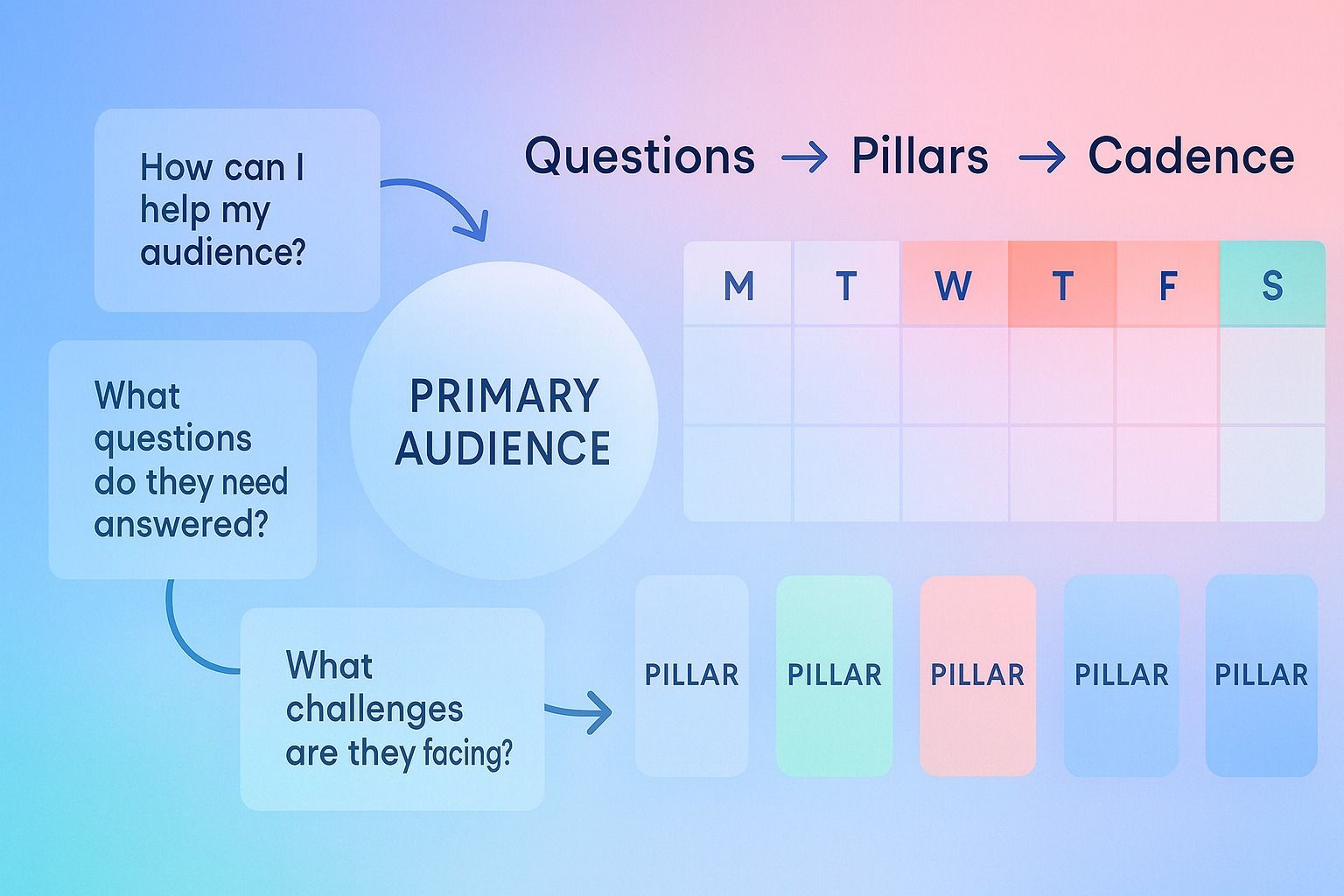
Step 1: Pick one primary audience
Do not try to nurture everyone at once.
Examples:
- B2B SaaS founders
- Boutique agency owners
- Professional services firms with inconsistent pipeline
- Mid-market teams hiring external strategy support
If your content tries to speak to five buyer types, it will usually resonate with none.
Step 2: Define the long-sales-cycle questions
Make a list of the questions buyers ask before they hire you.
For example:
- Why solve this now?
- What is causing the issue?
- What happens if we delay?
- What would a smart fix look like?
- What should we do internally before hiring help?
- How do we know if a consultant is the right fit?
Those questions become your content engine.
Step 3: Build 3-4 recurring content pillars
A simple structure for consultants:
- Insights: what is changing in the market
- Education: frameworks, explanations, breakdowns
- Proof of thinking: process, case patterns, lessons learned
- Decision support: buyer readiness, timing, tradeoffs
This gives your audience a reason to keep paying attention without feeling like they are being sold to.
Step 4: Create content for each stage of trust
Not every prospect needs the same message.
Use a simple trust ladder:
- Early stage: name problems and patterns
- Middle stage: explain frameworks and options
- Late stage: address objections, fit, and outcomes
Step 5: Turn ideas into a repeatable cadence
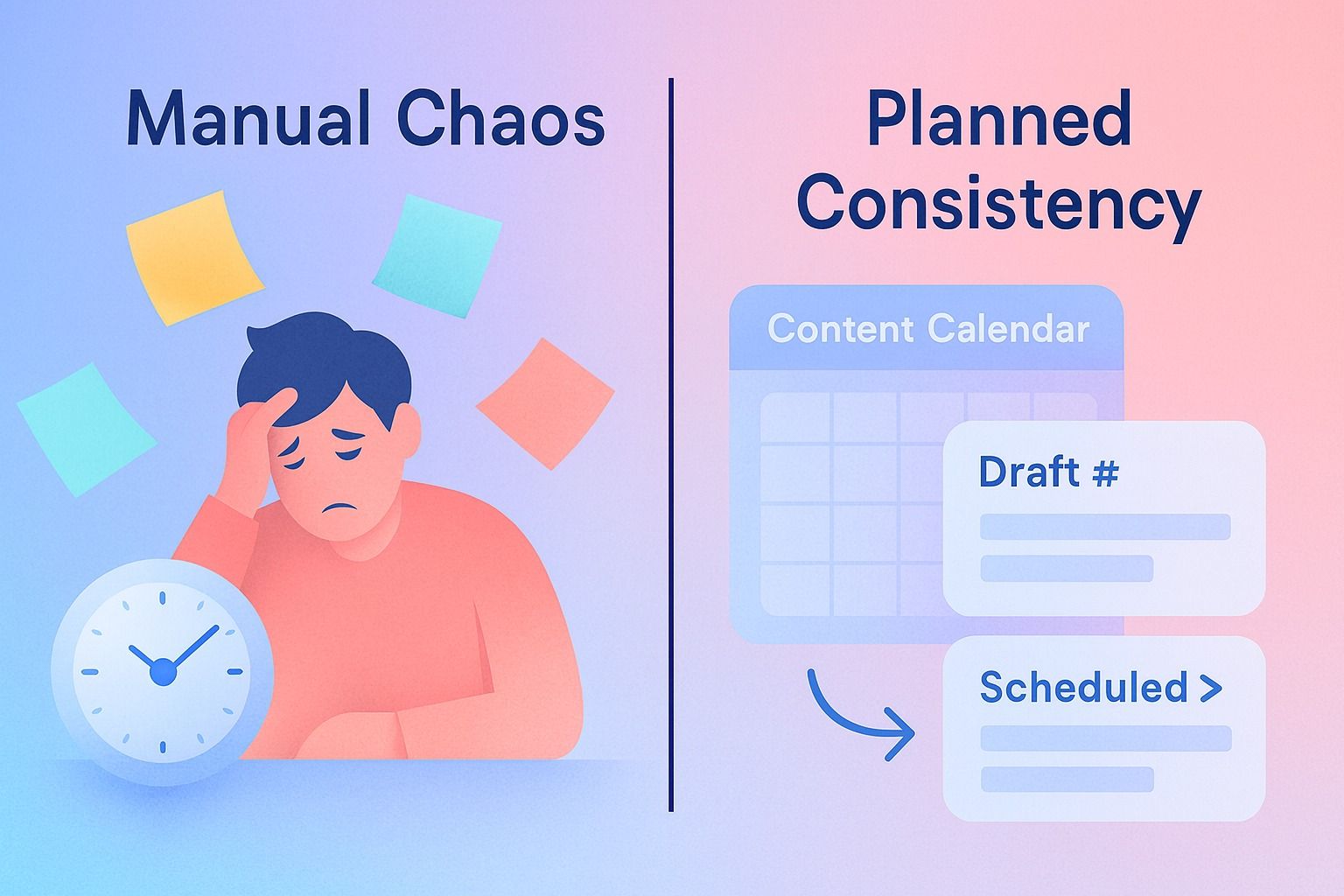
This is where many consultants fall apart. They know what to say, but they do not package it into a repeatable schedule.
A planning system helps.
That is where an AI LinkedIn agent can help by keeping your content organized from ideas to calendar without turning every week into a blank-page exercise.
Dynal's Planning & Calendar surface supports LinkedIn content planning and scheduling. You can create a posting plan with goals, date range, timezone, language, tone, post count, and Brand DNA context, then review generated topics or posts and place them on a scheduling calendar. For consultants, that is useful because nurturing works better when content is planned across weeks rather than improvised day by day.
How can a consultant turn LinkedIn content into consistent lead nurture?
Think of LinkedIn content as a sequence, not isolated posts.
A single post may earn attention. A sequence builds trust.
Example of a 2-week nurture sequence
Week 1
- Post 1: A common mistake your ideal client makes
- Post 2: A short framework for diagnosing the issue
- Post 3: A story or pattern from real client work
Week 2
- Post 4: What happens when the issue goes unresolved
- Post 5: When to fix it internally vs. bring in outside help
- Post 6: A low-pressure CTA like "If you are dealing with this, I am happy to share how I would assess it"
This style of consultant marketing keeps the conversation going without relying on hard-sell tactics.
What makes LinkedIn especially useful for nurturing
LinkedIn is strong for consultants because prospects can repeatedly encounter:
- Your ideas
- Your positioning
- Your point of view
- Your credibility signals
- Your consistency
That repeated exposure matters in B2B consulting. It helps prospects feel like they already know how you think before they ever book a call.
How do you set up a content cadence for consultant marketing and lead nurturing?
The best cadence is the one you can sustain while staying useful.
For most consultants, this is enough:
- 2 to 3 posts per week if you are building consistency
- 3 to 5 posts per week if LinkedIn is a major growth channel
You do not need to post daily to nurture well. You need to post regularly enough that buyers do not forget you.
A simple weekly cadence
Try this:
- Monday: market insight or contrarian take
- Wednesday: educational framework or breakdown
- Friday: buyer-readiness or decision-support post
This balance works because it mixes awareness, authority, and conversion support.
Decision criteria for choosing your cadence
Choose your posting frequency based on:
- Sales cycle length
- Deal size
- Available writing time
- How many audience segments you serve
- Whether LinkedIn is your primary demand channel
If your deals are high-ticket and slow-moving, consistency matters more than volume.
A practical checklist for consultant lead nurturing on LinkedIn
Use this before you commit to a strategy:
- Do I know exactly who my primary audience is?
- Do I know the questions they ask before buying?
- Do my posts address different stages of trust?
- Am I teaching more often than pitching?
- Do I have recurring content pillars?
- Do I have a weekly schedule I can actually maintain?
- Do I review what topics I have already covered so I am not repeating myself randomly?
If you cannot check most of these, the issue is usually not creativity. It is planning.
Common mistakes in consultant marketing lead nurture
Mistake 1: Posting only when business feels slow
Fix: Build a calendar before you need pipeline urgently.
Mistake 2: Writing every post like a mini sales page
Fix: Lead with clarity, not conversion pressure.
Mistake 3: Talking only about yourself
Fix: Talk more about buyer problems, decisions, and tradeoffs.
Mistake 4: Mixing too many audiences
Fix: Choose one primary audience and one main set of pain points.
Mistake 5: Repeating generic advice
Fix: Use your real consulting perspective, patterns, and diagnosis language.
Mistake 6: No bridge from content to next step
Fix: Use soft CTAs such as:
- "If this is showing up in your team, this is where I would start"
- "Happy to share the framework I use for this"
- "If you are evaluating this problem now, I can outline the options"
Templates consultants can use for lead nurturing posts
Here are a few simple templates.
Template 1: The costly mistake post
Hook: Most teams get this wrong when they try to [goal].
Body: The issue is usually not [obvious thing]. It is [real issue]. Here is why that matters.
Close: If you fix this first, the rest becomes much easier.
Template 2: The diagnostic post
Hook: If [problem] is happening, check these three things first.
Body: First, [factor]. Second, [factor]. Third, [factor].
Close: Most people jump to tactics before diagnosing the real constraint.
Template 3: The buyer-readiness post
Hook: You may not need a consultant yet if these conditions are still true.
Body: List 3-4 signs of low readiness.
Close: External help works best when the problem, owner, and urgency are clear.
Template 4: The point-of-view post
Hook: My unpopular opinion about [industry topic].
Body: Explain what most people believe, what you believe instead, and why.
Close: This is the lens I use when advising clients.
Where Dynal fits in
If you are trying to make consultant marketing more consistent, Dynal should be thought of as an AI LinkedIn agent, not just a writing tool.
It helps structure the workflow from brand context to content creation to planning and scheduling. In practice, that matters for lead nurturing because consistency is usually lost between good ideas and actual posting.
For consultants, a useful setup is:
- Use Brand DNA to define your audience, voice, and topic guardrails
- Use the content creation workspace to draft posts from your ideas and source material
- Use Planning & Calendar to turn those posts into a repeatable LinkedIn schedule
That keeps your nurture system grounded in your positioning instead of forcing you to start from scratch every week.
If you want a system like that in one place, Dynal is an AI LinkedIn agent designed to help you plan and create content with your brand context in mind.
Final takeaway
The best lead nurturing strategy for consultants is simple:
- Pick one audience
- Answer their buying questions in public
- Publish with a steady cadence
- Focus on trust before conversion
- Use a planning system so consistency does not depend on motivation
If you want a practical starting point, go through Dynal's Onboarding & Setup flow with the LinkedIn-first connection. It is a fast way to build starter brand context before creating a content plan and scheduling your nurture posts.
When your LinkedIn presence is structured, lead nurturing becomes much easier to sustain.