

If you want multilingual SEO content that stays high quality, the best workflow is simple: create one canonical source, localize with clear rules instead of doing direct word-for-word translation, QA every language for search intent and metadata, and publish through a controlled process.
That approach helps you avoid the two biggest failures in i18n content: inconsistent source versions and translated pages that are technically correct but weak for local search behavior.
For teams managing content operations, the practical goal is not to translate faster at any cost. It is to keep meaning, brand voice, and SEO intent aligned across languages while maintaining a clean publishing process.
In practice, that means treating translation, localization, metadata, internal links, and QA as one workflow instead of separate handoffs.
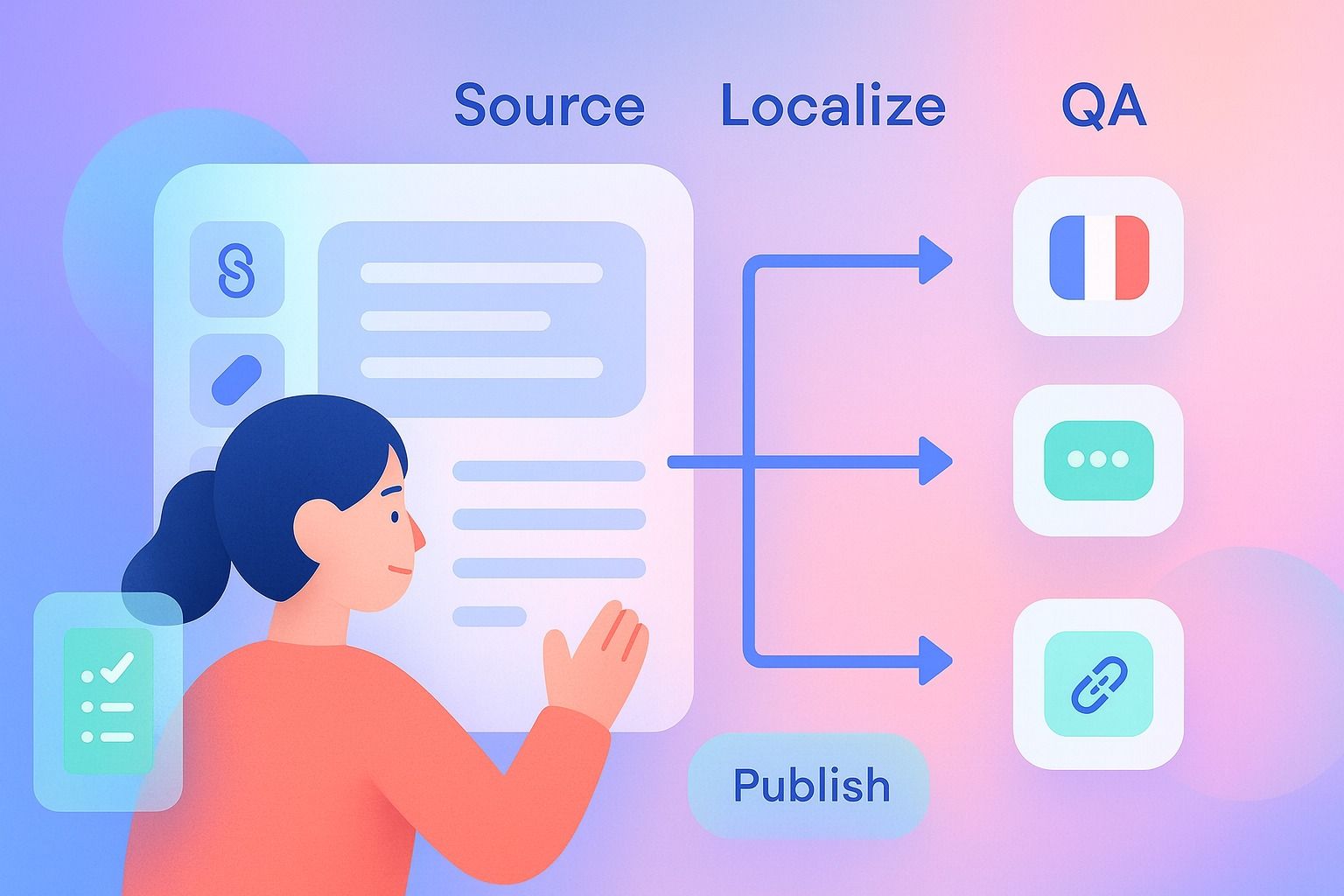
If you want a workflow layer that helps keep those moving parts organized around LinkedIn content, Dynal is built as an AI LinkedIn agent rather than a generic writing tool. It can help structure the path from draft to publish as a workflow support layer, while you keep editorial judgment and approval.
Here is the short version:
- Start with one canonical source post that acts as the master reference.
- Translate for meaning and search intent, then localize examples, phrasing, and metadata for each market.
- Keep H1s, title tags, meta descriptions, and internal links language-specific instead of copying the source blindly.
- Use a review checklist before publishing to catch quality drift and SEO issues.
- Use a structured publishing workflow so source, edits, and scheduling stay organized.
Why multilingual SEO content often loses quality
Most quality problems do not come from translation alone. They come from process.
A blog post gets written in one language, sent to a translator without context, lightly reviewed, then published with copied metadata and outdated source references. A few weeks later, the original article changes, but the translated versions do not. Now the content is inconsistent, the messaging drifts, and search performance becomes harder to diagnose.
If your goal is multilingual SEO, you need a workflow that answers five questions clearly:
- What is the canonical source?
- What must be translated exactly?
- What should be localized per market?
- Who checks SEO and quality before publish?
- How do updates to the source post get reflected in translated versions?
Translation vs. localization for i18n content
This distinction matters more than most teams realize.
Translation
Translation converts content from one language to another while preserving meaning.
Examples:
- Product descriptions
- Definitions
- Process explanations
- Quotes where wording matters
Localization
Localization adapts content for the audience in a specific language and market.
Examples:
- Rewriting examples so they feel native
- Adjusting idioms that do not travel well
- Changing keyword targets to match local search behavior
- Adapting CTA phrasing to local expectations
- Updating units, date formats, references, or cultural context
The practical rule
Use translation to preserve the message.
Use localization to preserve usefulness.
If you only translate, the page may be understandable but still weak for SEO and conversion. If you localize without a stable source, the content can drift away from the original meaning.
That same balance—consistency with room for local adaptation—is where Dynal can fit as an AI LinkedIn agent for planning and publishing LinkedIn content. It gives teams a structured place to keep brand context and workflow together while they decide what needs to stay fixed and what should change.
The best translation workflow for multilingual SEO blog content
Here is a practical workflow that balances consistency, speed, and search performance.
Step 1: Create a canonical source post
Choose one source language version as the canonical editorial reference. This is your master article.
Your canonical source should include:
- Final approved body copy
- Final H1
- Target keyword and secondary keywords
- Search intent notes
- Internal links to preserve or adapt
- CTA guidance
- Notes on what can and cannot be changed in translation
This master version should be the only source used for downstream localization.
Canonical source template
Use a brief header like this at the top of the source document:
- Source language: English
- Post owner: Content lead
- Last approved version: May 2026
- Primary keyword: multilingual SEO
- Secondary keywords: translation workflow, localization, i18n content
- Search intent: informational, practical
- Non-negotiables: keep framework, keep examples about blog operations, preserve CTA
- Localizable elements: examples, phrasing, metadata, keyword variants
Step 2: Build a localization brief for each language
Do not send only the article. Send context.
A good localization brief includes:
- Target language and region
- Audience description
- Primary local keyword
- Secondary local keyword variations
- Tone notes
- Terms to preserve in English if needed
- Terms that must be translated
- Competitor or SERP notes for that market
This is where many multilingual SEO workflows improve immediately. Translators and editors do better when they know what the page is trying to rank for and who it is for.
Step 3: Translate for intent, not sentence symmetry
The goal is not to mirror every sentence structure. The goal is to preserve meaning and satisfy the same search intent.
For example, an English phrase like "quality drift" may need to become a more descriptive phrase in another language if there is no natural equivalent. That is good localization, not inconsistency.
Decision criteria during translation:
- Preserve meaning exactly when the concept is precise.
- Rewrite freely when direct translation sounds unnatural.
- Keep the structure if it helps clarity.
- Change the structure if local readability improves.
- Adapt examples when the original reference would feel foreign or vague.
Step 4: Localize SEO metadata separately
Never assume your translated title tag, meta description, and H1 should be direct copies of the source structure.
Metadata should be localized with local keyword behavior in mind.
What to localize for each language
- Title tag
- Meta description
- H1
- URL slug, if your site structure supports localized slugs
- Image alt text where relevant
- Internal anchor text
- FAQ wording
What to check
- Does the title use the primary local keyword naturally?
- Does the H1 match search intent in that language?
- Does the meta description read like a native search snippet?
- Are internal links pointing to the correct language versions?
How to keep the canonical source consistent across translated blog posts
This is the operational core of a reliable multilingual content program.
Use version control, even if it is lightweight
You do not need a complex enterprise system. You do need discipline.
Track these fields for every translated post:
- Source post ID or title
- Source version number
- Translation version number
- Language owner
- QA status
- Publish status
- Last synced date
If the source post changes materially, translated versions should be reviewed against the new source version before being updated.
For teams that want that kind of source-to-publish discipline around LinkedIn, Dynal can serve as the AI LinkedIn agent that keeps planning and publishing more organized. It is a practical fit when your content process depends on clear versioning and review before distribution.
Define change thresholds
Not every source edit requires retranslating every version.
Minor changes
Usually no full relocalization needed:
- Typo fixes
- Small clarity edits
- Minor formatting updates
Major changes
Usually require review in every language:
- New section added
- Key argument changed
- Updated CTA
- Metadata repositioning
- New product terminology
- Important internal links changed
Keep one owner for the source of truth
Someone should own the canonical source. That can be your content lead, SEO lead, or market editor. Without clear ownership, version drift becomes inevitable.
How to localize titles, meta descriptions, and H1s without damaging SEO
This is where direct translation often causes ranking problems.
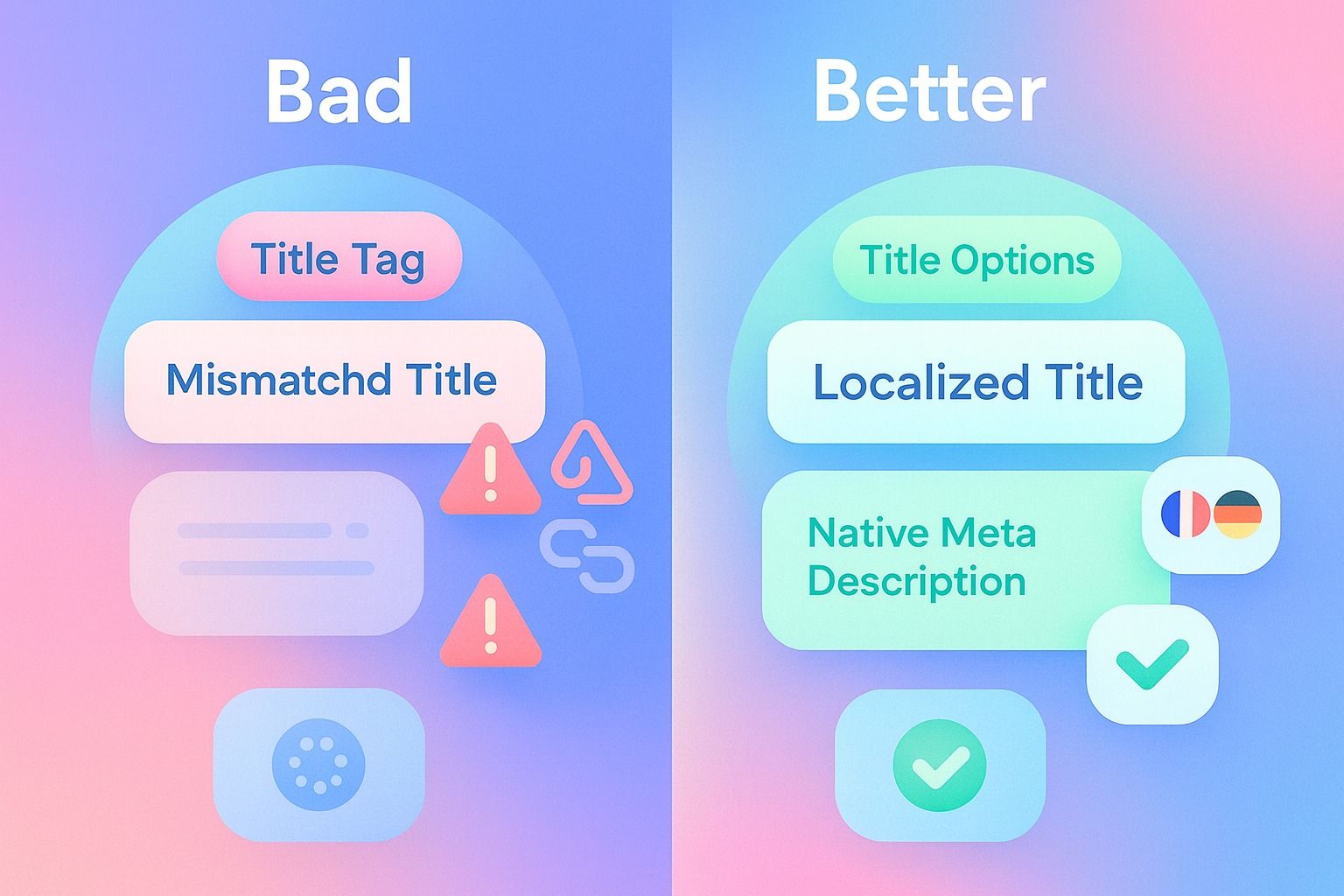
A bad approach
- Translate the English title word for word
- Reuse the same meta description structure in every language
- Force the exact same keyword placement everywhere
A better approach
- Research how the topic is searched in the target language
- Write the title for local phrasing and click behavior
- Align the H1 with the primary query pattern in that market
- Write a meta description that sounds native and useful
Simple metadata workflow
For each language version:
- Identify the local primary keyword.
- Identify one or two natural secondary variations.
- Draft three title options.
- Draft one H1 that best matches search intent.
- Write a meta description from scratch instead of translating the source meta line by line.
- Check the live SERP style for that locale before finalizing.
Example metadata framework
Source topic:
"Multi-language Blogging Without Losing Quality"
English title tag:
"Multilingual SEO Translation Workflow: How to Localize Blog Content Without Losing Quality"
Localized version template:
"[Local keyword]: [Outcome or benefit] + [practical angle]"
That framework keeps consistency of intent without forcing unnatural wording.
Step-by-step QA process to avoid SEO issues and quality drift
A strong QA process is what keeps multilingual content usable at scale.
Editorial QA checklist
- The meaning matches the canonical source.
- The examples feel natural in the target language.
- Brand terminology is consistent.
- Awkward literal phrasing has been rewritten.
- Paragraph flow feels native, not translated.
SEO QA checklist
- The target keyword is correct for the market.
- The title tag is localized, not copied mechanically.
- The H1 is aligned with local search intent.
- The meta description is unique and native-sounding.
- Internal links point to the right language pages.
- Canonical and hreflang implementation are correct based on your site setup.
- Slug conventions match your localization model.
Technical QA checklist
- Character encoding displays correctly.
- Special characters render properly in titles and body copy.
- Layout survives text expansion.
- Buttons, forms, and embedded elements are localized where required.
- Structured data reflects the correct language version if used.
Final publish QA checklist
- Source version is recorded.
- Translation version is recorded.
- Reviewer has approved the final copy.
- Metadata is complete.
- Internal links and CTA links are correct.
- Publish date and market assignment are correct.
Common mistakes in multilingual SEO workflows and how to fix them
Mistake 1: Treating translation as the entire job
Fix: Separate translation from localization and metadata work.
Mistake 2: No canonical source owner
Fix: Assign one owner for source updates and version control.
Mistake 3: Copying metadata across languages
Fix: Write title tags, meta descriptions, and H1s for each market independently.
Mistake 4: Publishing without market-specific QA
Fix: Add editorial, SEO, and technical review before publish.
Mistake 5: Updating the source post without checking translated versions
Fix: Use change thresholds and sync reviews when major source edits happen.
A practical workflow example teams can adapt
Here is a lightweight operating model for one source post and three localized versions.
Example workflow
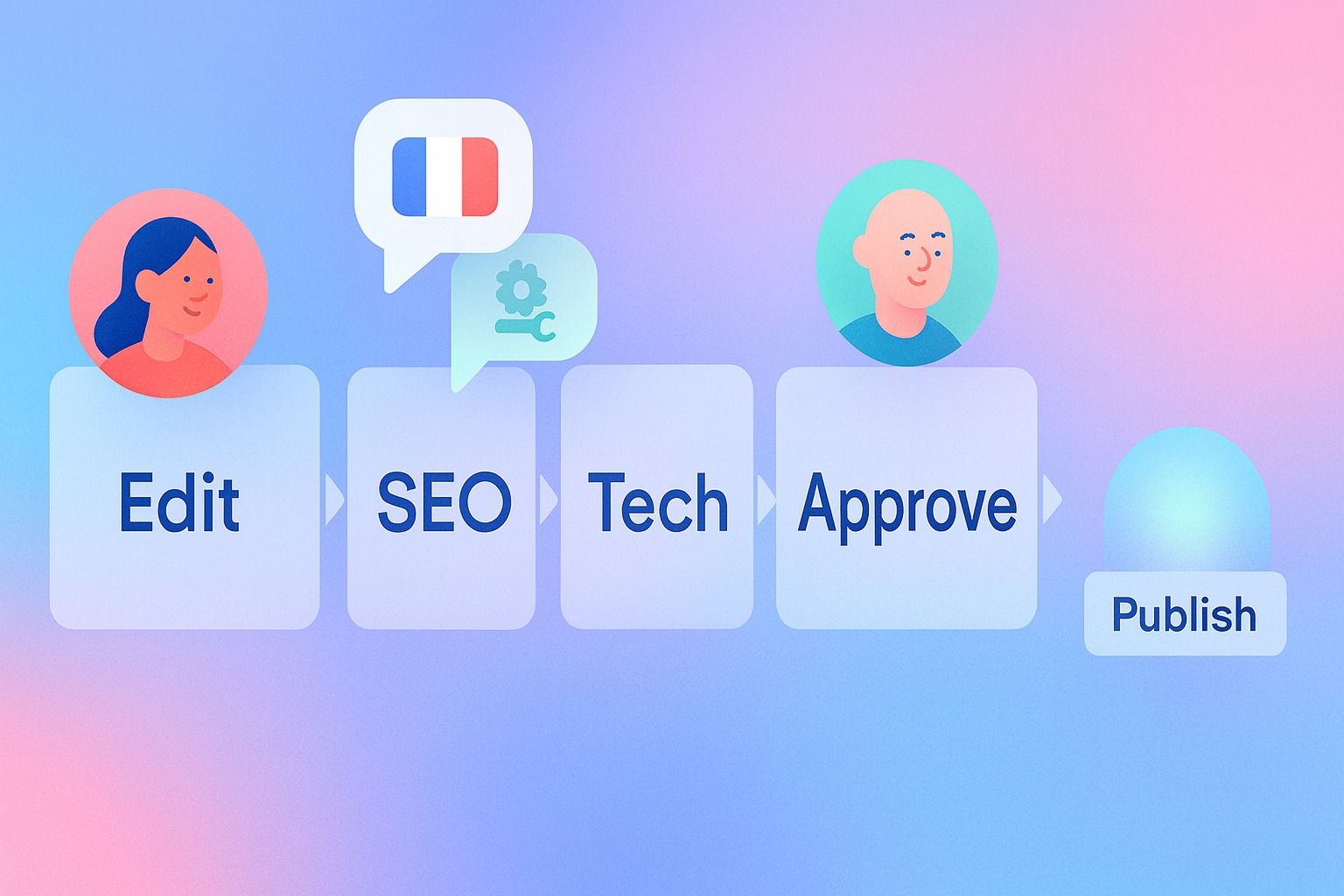
- Content lead writes and approves the source article.
- SEO lead adds keyword intent notes and localization guidance.
- Local editor or translator creates the target-language draft.
- Native reviewer checks clarity and localization quality.
- SEO reviewer localizes metadata and internal links.
- Final approver signs off.
- The post is scheduled and published.
- Source version and translated version are logged for future updates.
If you manage publishing through a structured system, this gets easier to maintain.
For example, Dynal supports project-based content threads and a draft-to-publish workflow through Projects & Publishing. That is useful when you want your content creation context, review flow, and publish or schedule decision to stay connected in one place. Used correctly, it helps teams keep the path from draft to published LinkedIn content more organized, especially when coordinating language-specific variations around a campaign or thought-leadership theme.
Because Dynal is an AI LinkedIn agent, it is best positioned here as the workflow layer for planning, creating, reviewing, and publishing LinkedIn content around your multilingual content strategy, not as a replacement for native-language editorial judgment.
Decision criteria: when to translate, localize, or rewrite
Use this quick framework.
Translate directly when
- The concept is precise and universal.
- The wording is instructional.
- Brand meaning would be harmed by adaptation.
Localize when
- Search behavior differs by market.
- Idioms or examples would feel unnatural.
- The CTA needs local nuance.
- Metadata needs different phrasing to earn clicks.
Rewrite substantially when
- The target market has meaningfully different search intent.
- The examples rely on local context that does not transfer.
- The article structure is wrong for the target audience.
Templates you can reuse
Localization brief template
- Target language:
- Target region:
- Audience:
- Primary keyword:
- Secondary keywords:
- Search intent notes:
- Terms to preserve:
- Terms to avoid:
- Tone guidance:
- Competitor or SERP notes:
- Internal links to adapt:
- CTA goal:
Translation QA scorecard
Rate each from 1 to 5:
- Meaning accuracy
- Natural fluency
- Brand terminology consistency
- Keyword fit
- Metadata quality
- Internal link accuracy
- Publish readiness
Anything below 4 should trigger revision before publish.
Final takeaway
The best translation workflow for multilingual SEO is not just translation. It is source control, localization, metadata adaptation, and QA working together.
If you want to keep quality high across languages, do these four things consistently:
- Maintain one canonical source.
- Localize for search intent, not just wording.
- Treat metadata as market-specific copy.
- Use a repeatable QA checklist before publishing.
That is how you scale i18n content without creating quality drift.
If you are building a more structured content operation around LinkedIn, start with Dynal's Onboarding & Setup. The LinkedIn-first connection helps you get to a usable starting point faster, then you can organize content creation and publishing with clearer brand context and workflow control.