

The Blog SEO Checklist 2026: What Still Works After AI Search Changes
Yes, blog SEO still works in 2026.
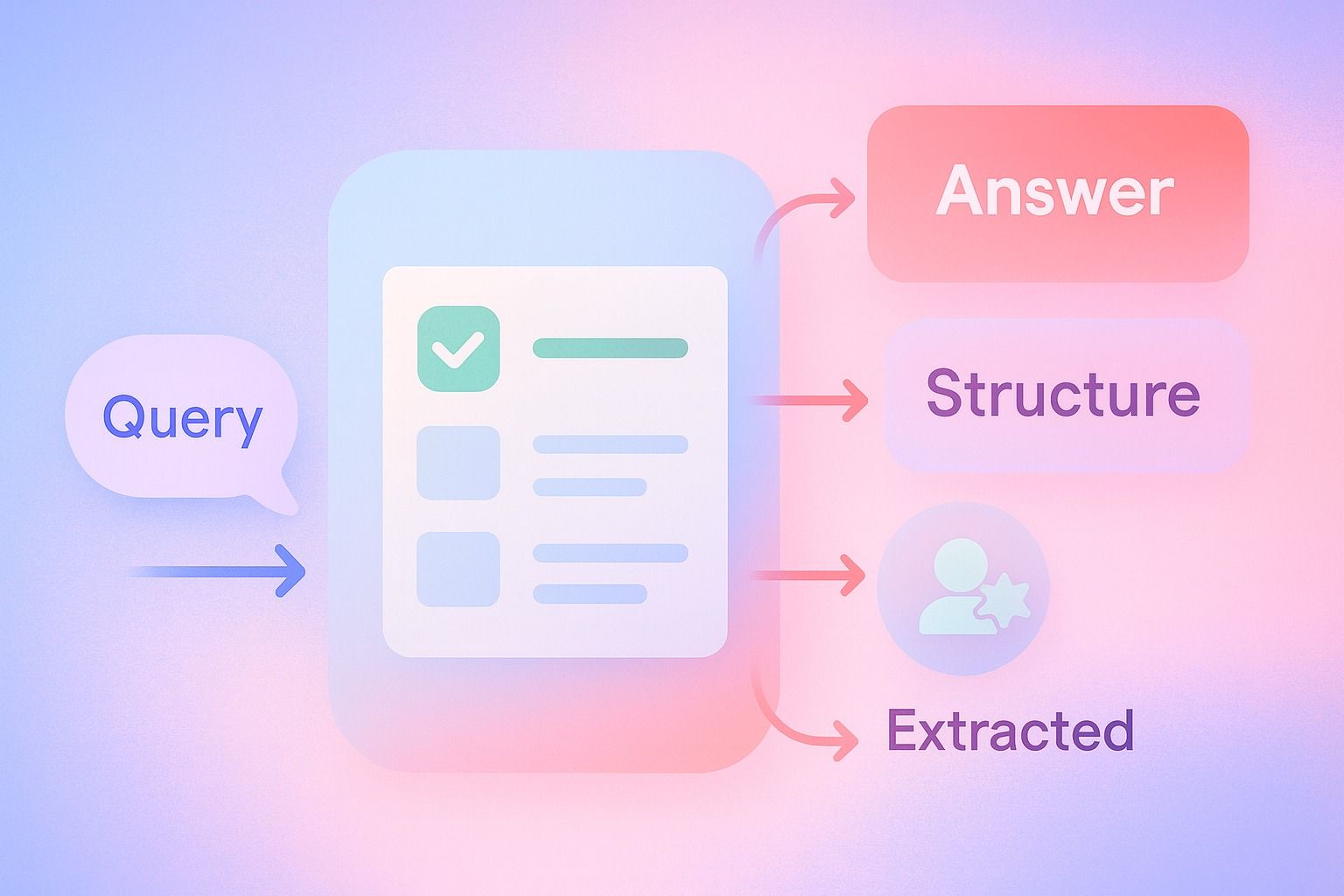
What changed is not the need for SEO, but the standard for what earns visibility. After AI search changes, the blog posts that keep performing are genuinely useful, clearly structured, easy to verify, and tightly connected to search intent.
If you want a practical rule: publish content that answers the query fast, proves it understands the topic deeply, and helps readers and search systems navigate the page with confidence.
That means the fundamentals still matter:
- Intent matching
- On-page SEO
- Internal linking
- Content freshness
- Strong information architecture
What matters less is filler, generic commentary, and writing only for rankings.
If you're also turning this kind of content into LinkedIn posts, Dynal can help you keep the message consistent. It works as an AI LinkedIn agent for planning posts in your brand voice.
In short:
- Match the exact job the searcher is trying to get done.
- Make the page easy to scan, quote, and extract.
- Build topical connections with internal links.
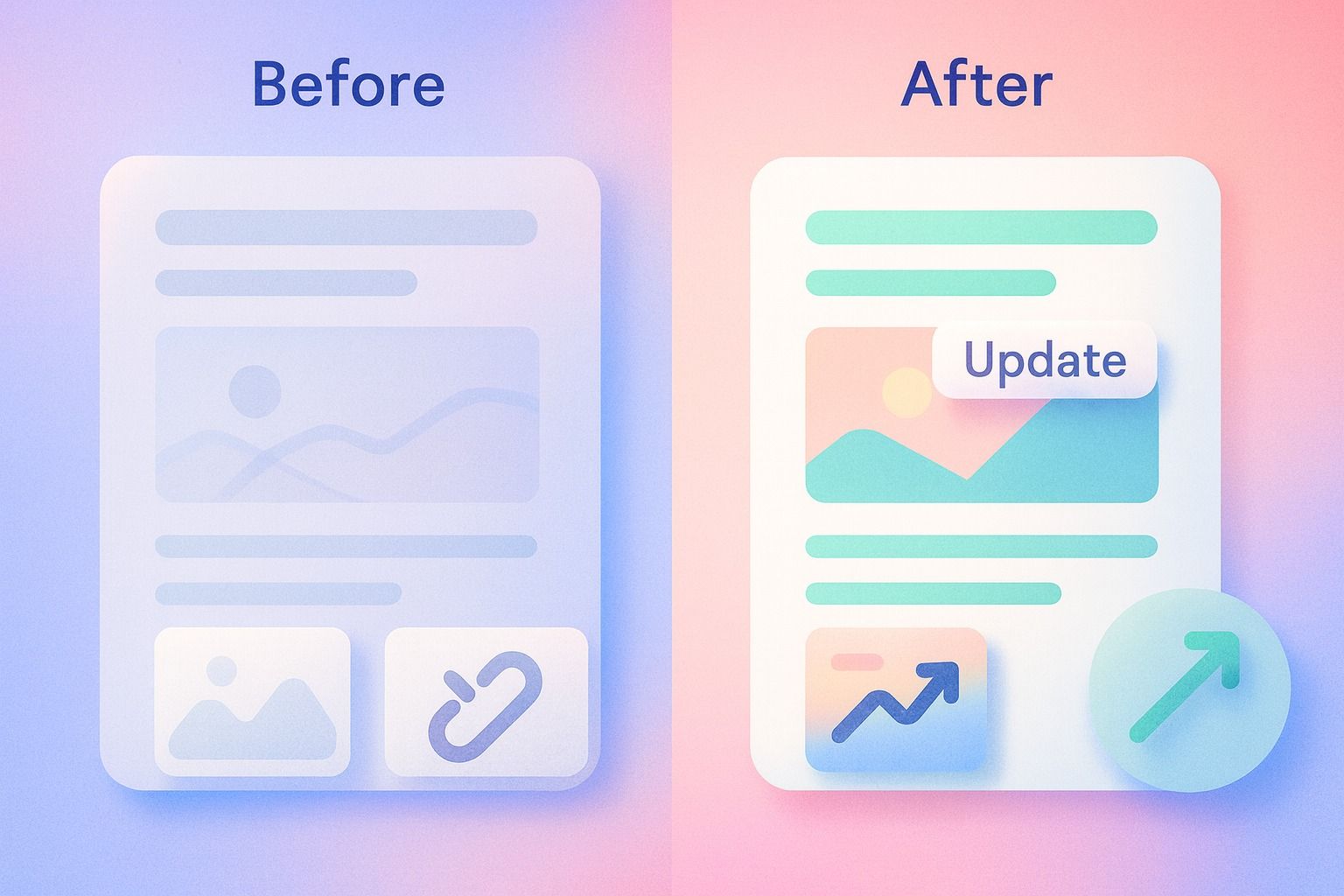
- Update aging posts before they decay.
- Use AI to speed workflows, not to mass-produce thin content.
What should be on a blog SEO checklist in 2026?
A useful SEO checklist in 2026 should cover five areas:
- Search intent alignment
- On-page SEO structure
- AI search visibility signals
- Internal linking and topic relationships
- Content maintenance and updates
Here is the short version before we go deeper.
The blog SEO checklist 2026
1) Intent and topic fit
- Confirm the primary keyword and 2 to 5 close variants.
- Define the search intent: informational, commercial, navigational, or transactional.
- Identify what the reader wants in the first 30 seconds.
- Decide the format that best fits the query: checklist, how-to, comparison, template, or explainer.
- Make sure the article has a clear angle, not just a broader rewrite of existing pages.
2) Answer-first page structure
- Put the direct answer near the top.
- Use a concise intro that confirms the problem and outcome.
- Add scannable subheads that mirror real questions.
- Break long sections into short paragraphs, bullets, tables, or steps.
- Include a summary list early for skim readers.
3) On-page SEO basics that still matter
- Write a specific title tag with the main keyword naturally included.
- Use an H1 that reflects the query and promise.
- Add descriptive H2s and H3s around subtopics.
- Optimize the meta description for clicks, not keyword stuffing.
- Use clean URLs.
- Add image alt text where images contribute meaning.
- Improve readability, mobile formatting, and load experience.
If you want a more structured way to turn a finished article into a LinkedIn content workflow, Dynal is built as an AI LinkedIn agent rather than a generic writer. That makes it a useful next step when you need consistent voice and topic planning across posts.
4) AI search visibility improvements
- Make claims concrete and easy to verify.
- Include definitions, examples, and direct answers.
- Use clear entity language instead of vague phrasing.
- Add original framing, examples, or experience-based insight.
- Structure content so sections can stand alone if quoted or summarized.
5) Internal linking
- Link to relevant supporting articles.
- Link from older posts into newer strategic pages.
- Use descriptive anchor text.
- Close orphan pages.
- Build topic clusters around core pages.
6) Content quality checks
- Remove fluff and repetitive AI phrasing.
- Replace generic advice with specifics.
- Add examples, mini-templates, or decision criteria.
- Check facts, dates, and references.
- Ensure the piece offers something distinct from the current results.
7) Update plan
- Review high-value posts on a recurring schedule.
- Refresh outdated stats, screenshots, and examples.
- Expand sections where the SERP now expects more depth.
- Tighten internal links after each update.
- Reassess titles and intros if click-through or engagement drops.
What still works for blog SEO after AI search changes?
A lot still works. The difference is that weak execution gets exposed faster.
Here is what continues to work in 2026.
1. Search intent alignment
This is still the foundation.
If someone searches for "blog SEO checklist 2026," they do not want a vague essay on the future of content. They want a practical list they can apply now. If your format misses that job, better optimization will not save it.
2. Strong on-page SEO
On-page SEO still matters because it helps both humans and machines understand what your page covers. Titles, headings, structure, internal links, and relevance signals are not outdated. They are the layer that turns good information into discoverable information.
3. Internal linking
Yes, internal linking still matters for blog SEO in 2026.
It helps search engines understand page relationships, distributes authority across your site, and guides readers toward deeper engagement. It also helps AI systems connect your content into a clearer topical map.
4. Freshness where it matters
Not every page needs constant updates. But for topics affected by platform changes, product updates, regulations, pricing, or new search behavior, freshness matters a lot.
5. Originality and specificity
Generic content is easier than ever to generate, so it is easier than ever to ignore. What stands out now is specificity: real examples, useful frameworks, nuanced recommendations, and honest tradeoffs.
How do I optimize blog posts for on-page SEO and AI search visibility?
The best approach is to optimize for understanding, extraction, and trust.
Here is a step-by-step process.
A step-by-step process for blog SEO in 2026
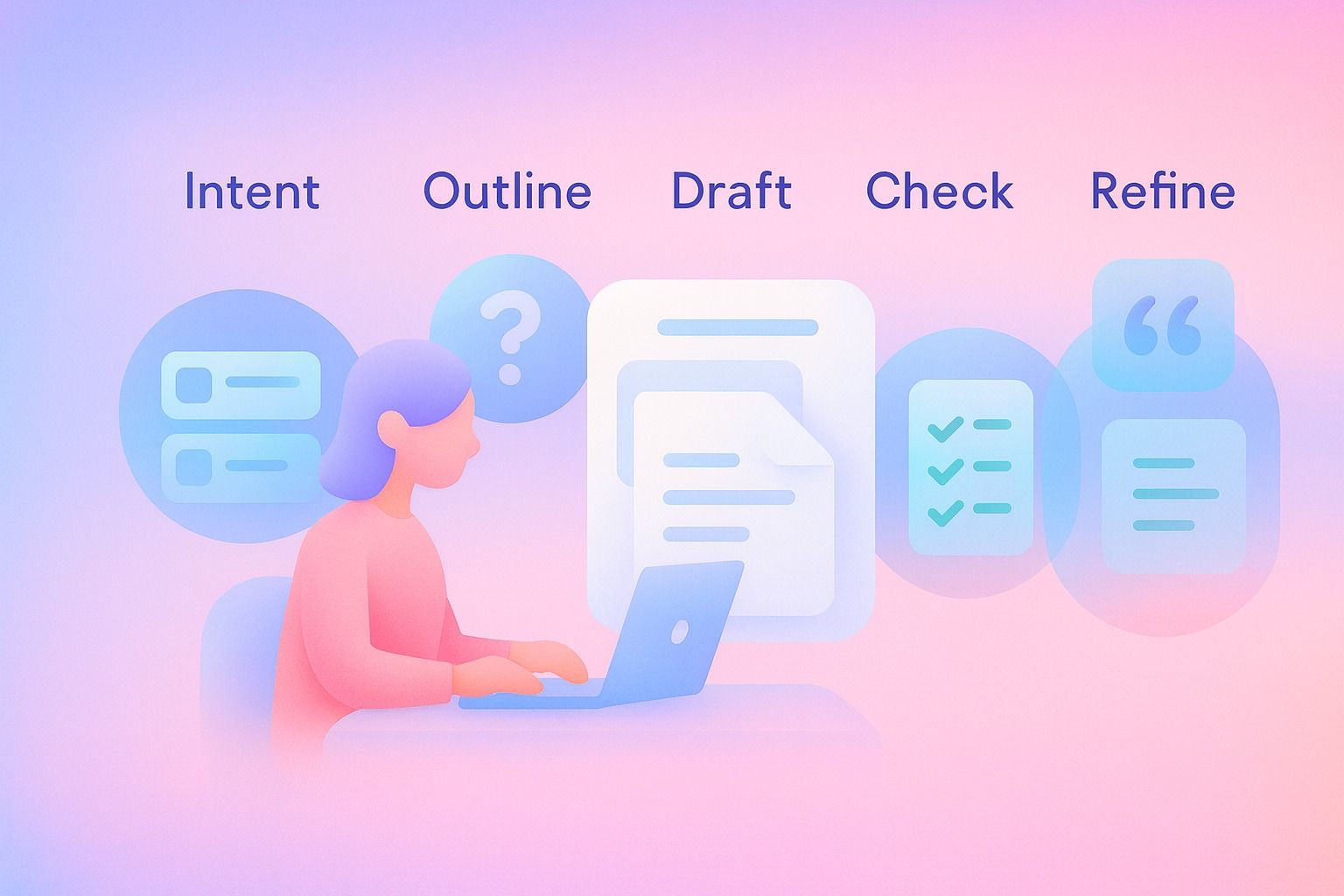
Step 1: Start with one primary intent
Pick the main query and define what success looks like for the reader.
For this article, the intent is: "Give me a current blog SEO checklist that still works after AI search changes."
That single sentence should guide the title, intro, headings, examples, and CTA.
Step 2: Build the outline from questions, not just keywords
Use the questions people actually ask:
- What should be on a blog SEO checklist in 2026?
- What still works after AI search changes?
- Does internal linking still matter?
- How often should I update older posts?
This improves coverage and creates sections that are easier for readers to scan and for search systems to interpret.
Step 3: Lead with the answer
Do not bury the takeaway under 400 words of scene-setting. Put the answer up front, then expand with context, examples, and nuance.
This is good for readers, and it also improves extractability for AI search experiences.
Step 4: Make headings do real work
Weak heading: "Things to know"
Better heading: "Does internal linking still matter for blog SEO in 2026?"
Question-based and descriptive headings create cleaner topical signals.
Step 5: Add structured depth
For each major section, include at least one of these:
- A checklist
- A process
- An example
- A comparison
- Common mistakes and fixes
This makes the content more useful and less generic.
Step 6: Tighten on-page SEO elements
Review:
- Title tag
- H1
- Meta description
- URL
- Heading hierarchy
- Internal links
- Image alt text
- Intro clarity
- CTA alignment
Step 7: Improve quote-worthiness
AI search systems often favor passages that can be extracted cleanly. That does not mean writing robotic summaries. It means writing concise, self-contained explanations.
For example:
Internal linking still matters in 2026 because it helps search engines map topical relationships, supports crawling, distributes authority, and moves readers to the next relevant page.
That is clearer and more quotable than three vague paragraphs.
Step 8: Update after publishing
Publishing is not the end of SEO. Watch performance, identify decaying pages, and refresh them before they fade too far.
Common blog SEO mistakes in 2026 and how to fix them
Mistake 1: Writing broad content with no clear outcome
Problem: The post covers a topic, but never clearly solves the reader's problem.
Fix: Rewrite the intro and headings around a specific promise. Turn vague sections into steps, templates, or decisions.
Mistake 2: Overusing AI-generated filler
Problem: The content is readable but forgettable. It says the obvious in slightly different ways.
Fix: Add original examples, sharper opinions, concrete criteria, and practical sequences.
Mistake 3: Ignoring internal links
Problem: Good posts sit isolated, with no supporting context.
Fix: Link every strategic post to related articles, definitions, and conversion pages.
Mistake 4: Updating only when traffic collapses
Problem: Teams wait too long to refresh aging content.
Fix: Review important posts on a recurring cadence, especially those tied to fast-changing topics.
Mistake 5: Optimizing only for rankings, not usefulness
Problem: The piece targets keywords but does not deserve to be cited, saved, or shared.
Fix: Ask: would someone bookmark this because it helped them act?
Does internal linking still matter for blog SEO in 2026?
Yes.
Internal linking still matters because it does four important things:
- Clarifies topic relationships across your site.
- Helps crawling and discovery of newer or deeper pages.
- Distributes authority toward strategic content.
- Improves user journeys by giving the next relevant step.
Internal linking decision criteria
When deciding whether to add an internal link, ask:
- Does the target page expand a concept mentioned here?
- Is the anchor text descriptive and natural?
- Does the link help the reader take the next logical step?
- Is this page part of a cluster that should point to a hub?
- Are there older posts that should now link back to this page?
Simple example
If you publish a post on "on-page SEO," you might naturally link to:
- A checklist post on technical content review
- A guide to internal linking
- A template for blog refresh workflows
- A service or product page tied to content operations
That is more useful than forcing ten exact-match anchors into random paragraphs.
How often should I update old blog posts to keep rankings?
There is no universal rule, but there is a useful operating rhythm.
A practical refresh cadence
- High-value, fast-changing posts: review every 3 to 6 months.
- Mid-value evergreen posts: review every 6 to 12 months.
- Low-value or low-relevance posts: review annually, consolidate, or prune.
Update sooner if you notice:
- Traffic decay
- Lower click-through rate
- Ranking slippage
- Outdated screenshots or examples
- Search results shifting toward a different format
- New questions appearing in the SERP
What to update first
- Title and meta description
- Intro and answer-first section
- Outdated facts or examples
- Missing subtopics now expected by searchers
- Internal links
- CTA and conversion path
In many cases, a focused refresh outperforms writing a brand new article from scratch.
A simple template for optimizing a blog post in 2026
Use this before you publish or update.
Blog SEO mini-template
Primary keyword:
Search intent:
Reader outcome:
Answer-first intro:
Top 3 questions to answer:
On-page SEO checks:
- Title tag written
- H1 aligned
- Meta description drafted
- Heading structure cleaned up
- Internal links added
- Images labeled where needed
- CTA matched to intent
AI search visibility checks:
- Direct answer near the top
- Definitions included
- Examples included
- Claims are specific
- Key sections can stand alone clearly
Update trigger:
- Review again in ___ months
What AI search changed, in plain English
AI search did not kill SEO. It raised the bar for clarity and usefulness.
Pages now compete not just to rank, but to be summarized, cited, extracted, and trusted. That rewards content with:
- strong structure
- precise language
- practical depth
- original value
- clear connections to related content
If this shift is changing how your team ships content, Dynal can help you translate source material into LinkedIn drafts with an AI LinkedIn agent workflow. It keeps the focus on brand context, structure, and consistency.
That is why blog SEO in 2026 is less about publishing more and more about publishing better.
Where Dynal fits in the workflow
If your team is already turning expertise into content, the challenge is usually not ideas alone. It is keeping the workflow consistent from source material to publish-ready output.
That is where Dynal fits as an AI LinkedIn agent.
Inside Workspace & Chat, teams can turn prompts and source materials into structured draft content in a chat-based creation flow, adjust tone and language, and move selected output into publishing steps. While this post is about blog SEO, the same operational discipline applies when repurposing blog insights into LinkedIn content: clear positioning, strong structure, and consistency in voice.
Dynal is not a generic writing tool. It is an AI LinkedIn agent built around Brand DNA, content planning, publishing, and lightweight analytics for LinkedIn workflows.
Final checklist: what still works in blog SEO in 2026
Before you publish, ask:
- Did we answer the query fast?
- Is the page better structured than competing results?
- Does it include specific examples or decision criteria?
- Are internal links helping readers explore the topic?
- Is the content fresh enough for this subject?
- Would a reader save or share this because it was genuinely useful?
If the answer is yes, you are aligned with what still works.
Next step
If you want a more structured way to turn expertise into consistent LinkedIn content after you publish, start with Dynal's Onboarding & Setup flow. The LinkedIn-first connection path helps you get to a usable setup faster, then you can shape content inside Workspace & Chat with your brand context in place.
The fundamentals still win. The teams that keep visibility in 2026 will be the ones that combine clear ideas, clean structure, and consistent execution.