
The Dynal Guide to Modern Content Operations (2026)
Content operations is the system that turns strategy into consistent publishing. If content strategy decides what you want to say and why, content operations defines how ideas move from planning to review, approvals, scheduling, publishing, and measurement.
In 2026, strong content operations matters because most teams do not fail from lack of ideas. They fail from bottlenecks, unclear ownership, scattered tools, and inconsistent execution across stakeholders.
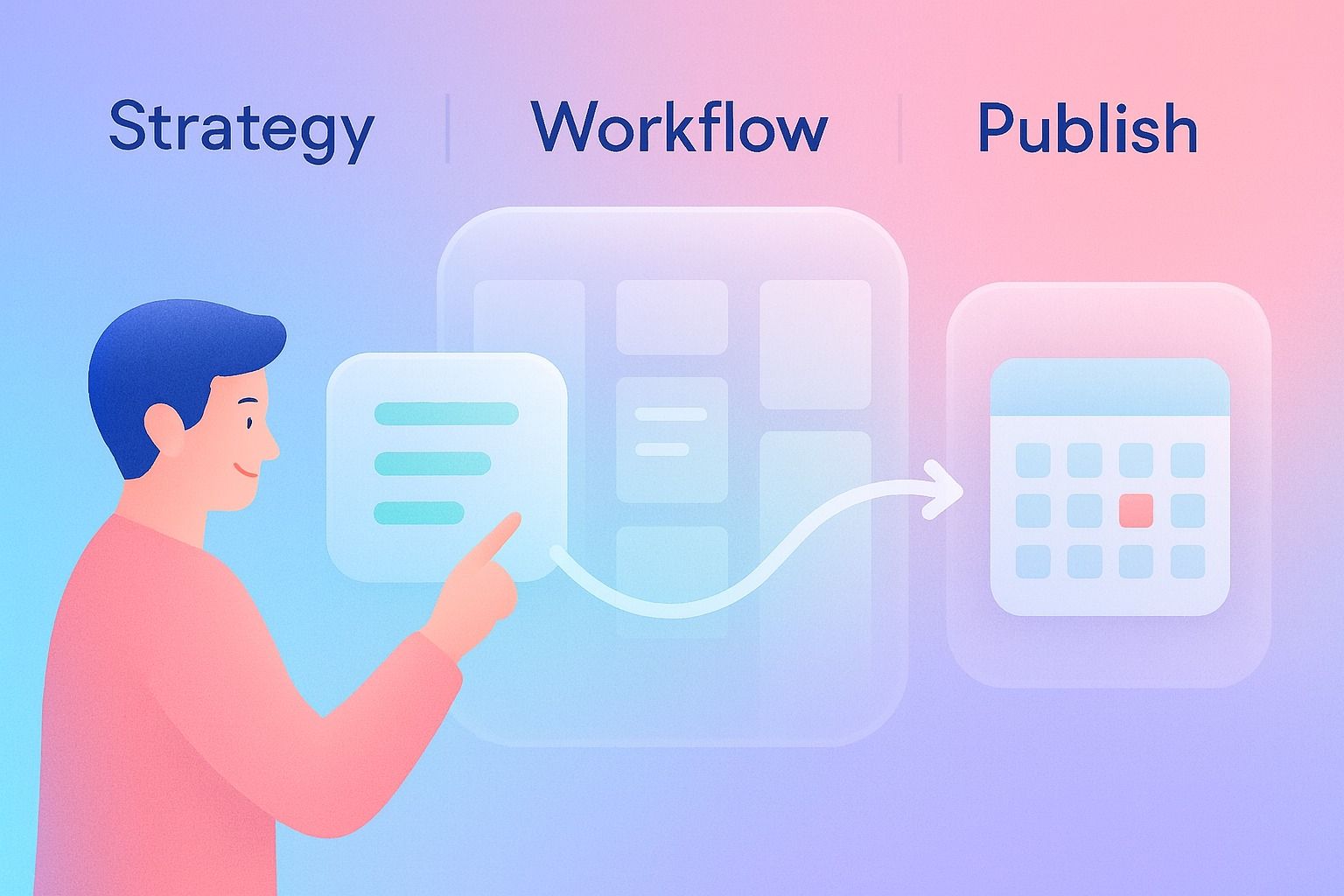
A modern setup should do three things well: create repeatable workflows, reduce approval friction, and keep content aligned with brand context. For LinkedIn-led teams, that means connecting planning, drafting, review, and publishing in one clear flow rather than treating each step as a separate task.
Dynal fits this shift as an AI LinkedIn agent: it helps teams organize brand context, create content in a chat-based creation flow, move drafts into review, and publish or schedule LinkedIn content through connected workflows like Projects & Publishing.
If you want to see how that workflow looks in practice, explore Dynal as an AI LinkedIn agent. It’s built to connect brand context, drafting, review, and publishing in one flow.
- Content strategy sets direction; content operations runs execution.
- A scalable content workflow needs clear stages, owners, and handoffs.
- A healthy editorial process reduces delays before they happen.
- Content governance keeps multiple stakeholders aligned without turning every post into committee work.
What is content operations?
Content operations is the operational system behind content production. It includes the people, process, tools, standards, and review rules that help a team publish consistently.
At a practical level, content operations covers:
- intake and idea capture
- planning and prioritization
- assignment and ownership
- drafting and editing
- review and approvals
- scheduling and publishing
- performance review and iteration
If your team asks questions like these, you are dealing with content operations problems:
- Who owns this draft right now?
- What happens before something is ready to publish?
- Why are approvals taking so long?
- Which version is final?
- How do we keep posts aligned with brand voice?
- What changes for different regions, business units, or executives?
Content operations vs. content strategy
This is the most common point of confusion.
Content strategy answers:
- Who are we trying to reach?
- What topics matter?
- What positioning do we want to own?
- What business goals should content support?
- What editorial themes should guide publishing in 2026?
Content operations answers:
- How does a content idea enter the system?
- Who writes, reviews, and approves it?
- What is the editorial process?
- What standards must every asset follow?
- How do we publish on time without constant status meetings?
A simple way to think about it:
Strategy chooses the destination. Content operations builds the road.
You need both. A smart strategy without workflow discipline becomes a backlog of unfinished ideas. A clean workflow without strategy becomes efficient output with weak impact.
What a modern 2026 content strategy looks like
A modern 2026 content strategy is not just a calendar full of topics. It is a system for publishing consistently across formats, stakeholders, and business priorities while staying recognizable in voice and message.
For most teams, that means five shifts.
1. Brand context becomes operational, not just conceptual
Many teams still keep voice, audience notes, and topic boundaries in scattered docs. In 2026, better teams treat brand context as an active input to creation.
That is why structured brand context matters. In Dynal, Brand DNA acts as a brand context system for voice, audience, boundaries, visuals, and reusable source knowledge. It helps teams keep guidance consistent without having to restate the same instructions every time a draft gets created.
For teams that want a cleaner way to keep brand context reusable, Dynal can help organize the inputs before drafting starts. That keeps the AI LinkedIn agent working from the same guidance every time.
2. Workflow matters as much as ideation
Publishing volume alone is no longer a sign of maturity. The real advantage comes from predictable execution: briefs are clear, review paths are known, and posts do not stall while waiting for the same executive every week.
3. Editorial process needs to support speed with control
The best teams are not choosing between quality and speed. They build editorial processes that define where judgment is required and where repeatable standards are enough.
4. Governance gets more specific as more people contribute
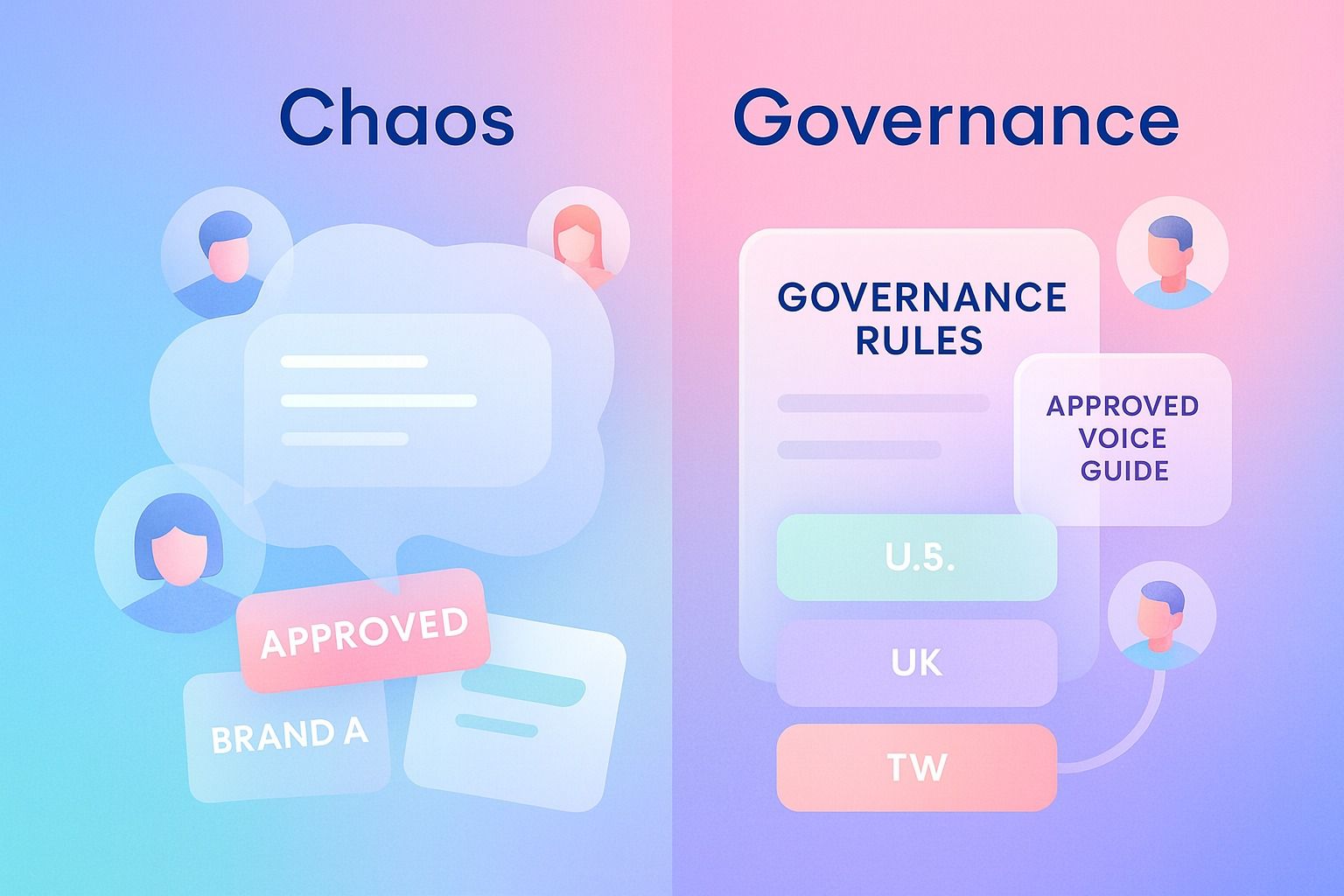
As soon as multiple leaders, markets, or business units are involved, content governance becomes necessary. Without it, every stakeholder creates their own version of the brand.
5. Publishing systems should connect planning to execution
A modern content strategy depends on fewer disconnected handoffs. Teams work better when planning, drafting, review, and scheduling are connected. For LinkedIn-focused publishing, that is where an AI LinkedIn agent can reduce fragmentation.
How to build a content workflow that scales
A scalable content workflow should be simple enough to follow every week and structured enough to handle growth.
Here is a practical step-by-step model.
Step 1: Define the workflow stages
Most teams need these core stages:
- Intake: collect ideas, requests, source material, and priorities.
- Planning: choose what gets produced, when, and for whom.
- Drafting: create the first version with the right brief and brand context.
- Editorial review: improve clarity, structure, accuracy, and fit.
- Approvals: get sign-off from the right person or people.
- Scheduling and publishing: assign date, format, and final publishing action.
- Performance review: inspect what worked and feed insights into the next cycle.
If these stages are not explicit, content tends to loop backward. People rewrite too late, ask for approvals too early, or publish without final checks.
Step 2: Assign one owner per stage
A workflow scales when ownership is visible.
Example ownership model:
- Intake: content lead
- Planning: editorial lead or marketing lead
- Drafting: writer, strategist, or subject matter expert
- Editorial review: editor or approver with editorial responsibility
- Final approval: executive, client lead, or regional owner
- Publishing: social or content operations owner
- Performance review: content lead
One stage can involve multiple contributors, but it should still have one accountable owner.
Step 3: Standardize required inputs
Every draft should begin with the same minimum input set.
Content brief template
- objective
- target audience
- key message
- source material
- desired format
- deadline
- approver
- topics to avoid
- CTA
This is where many teams save the most time. The fewer missing inputs at the start, the fewer revisions later.
Step 4: Create clear status definitions
Do not rely on vague labels like “in progress.” Use statuses that match decisions.
Example status set:
- Not started
- Brief ready
- Drafting
- In editorial review
- Changes requested
- Ready for approval
- Approved
- Scheduled
- Published
- Performance reviewed
Clear statuses make handoffs easier and show where bottlenecks actually sit.
Step 5: Keep creation and publishing connected
One common failure point is moving from approved draft to actual scheduling. Content is “done” in the document, but not actually on the calendar.
This is why connected workflows matter. In Dynal, Projects & Publishing links project-based content creation to publish-now or schedule-later actions for LinkedIn content. That helps reduce the gap between draft completion and distribution.
If the gap between approved drafts and actual publishing is a problem, Dynal is designed to close that handoff. As an AI LinkedIn agent, it helps keep the workflow moving from creation to distribution with human approval at the relevant steps.
Step 6: Build a review cadence, not just a production cadence
Weekly planning without weekly review creates drift. Teams should review:
- what was scheduled
- what slipped
- where approvals got stuck
- what performed well
- what needs process changes
A content workflow scales when the team improves the process, not just the output.
What should an editorial process include?
An editorial process is the quality-control layer inside your workflow. It should protect clarity, consistency, and timing.
At minimum, it should include the following.
1. Editorial standards
Define what “ready” means.
Example checklist:
- matches brand voice
- fits the audience
- supports one clear point
- includes a strong opening
- avoids unnecessary jargon
- has a clear CTA if needed
- is fact-checked
- follows format rules
2. Review sequence
Not every piece needs the same order, but the sequence should be predictable.
Example:
- writer self-review
- editor review
- stakeholder comments
- final approver sign-off
- publishing check
3. Turnaround times
Missed deadlines often come from invisible waiting time.
Set expected review windows such as:
- editor review: 24 hours
- stakeholder comments: 48 hours
- final approval: 24 hours before scheduled publish time
4. Revision rules
Avoid open-ended revision loops.
Decide:
- who can request changes
- what counts as a major vs. minor revision
- how many review rounds are normal
- when content is sent back to planning instead of being endlessly edited
5. Final publishing criteria
Before something is scheduled, verify:
- final copy is approved
- formatting is complete
- assets are correct
- timing is confirmed
- owner is assigned for publishing
Editorial process template
You can adapt this simple template for a weekly LinkedIn-led publishing process:
Monday
- review content priorities
- confirm briefs
- assign drafts
Tuesday to Wednesday
- draft posts
- run editorial review
- request revisions
Thursday
- secure final approvals
- prepare scheduled items
Friday
- publish or schedule next week’s content
- review performance from prior posts
- document learnings
This kind of rhythm is often more effective than treating every post as a custom process.
How to set up content governance for multiple stakeholders, brands, or regions
Content governance is the set of rules and responsibilities that keep content aligned when many people are involved.
It matters most when:
- multiple executives publish under the same company umbrella
- regional teams need local variation
- agencies and internal teams collaborate
- legal or compliance review exists
- several business units contribute content
Governance should create clarity, not bureaucracy.
A practical content governance model
Layer 1: Non-negotiables
These are the standards every piece must follow.
Examples:
- approved messaging pillars
- voice principles
- topics to avoid
- formatting rules
- legal review triggers
- approval requirements
Layer 2: Flexible local adaptation
Allow controlled variation for:
- regional examples
- local proof points
- executive point of view
- campaign timing
- audience-specific wording
Layer 3: Ownership map
Document who owns:
- strategy
- editorial standards
- approvals
- publishing calendar
- performance review
- exception handling
Layer 4: Decision criteria
When a stakeholder disagrees, how is the final call made?
Use criteria like:
- audience fit
- strategic priority
- factual accuracy
- brand alignment
- deadline impact
Without this, teams spend too much time debating preferences.
Governance checklist for 2026
Use this as a quick audit.
- Do we have a documented editorial process?
- Are roles and approvers clearly assigned?
- Do we have agreed brand voice guidance?
- Are audience definitions documented?
- Do we know which topics are out of bounds?
- Do regional or stakeholder variations follow shared rules?
- Is there one source of truth for planned vs. scheduled content?
- Can we identify bottlenecks by stage?
For LinkedIn-focused teams, a structured brand context system helps here. Dynal’s Brand DNA can support consistency by organizing voice, audience, boundaries, visuals, and reusable source knowledge in one place. That should be framed as guidance and consistency support, not as a replacement for editorial leadership.
Common content workflow bottlenecks and how to fix them
Most workflow problems are predictable. Here are the most common ones.
Bottleneck 1: Too many reviewers
What happens: everyone comments, nobody decides.
Fix: assign one editorial owner and one final approver. Everyone else gives input only when necessary.
Bottleneck 2: Weak briefs
What happens: drafts miss the mark because the writer had incomplete context.
Fix: require a standard brief before work begins.
Bottleneck 3: Brand inconsistency
What happens: posts feel like they come from different companies or leaders.
Fix: centralize voice, audience, and topic guardrails in a usable brand context system.
Bottleneck 4: Approval arrives too late
What happens: content is technically finished but misses the publishing window.
Fix: set approval deadlines before scheduling, not after.
Bottleneck 5: Planning and publishing are disconnected
What happens: approved drafts still sit idle because nobody converts them into scheduled posts.
Fix: connect content creation directly to publishing workflows. This is where a surface like Projects & Publishing is useful for LinkedIn operations.
Bottleneck 6: No post-publication review
What happens: the team repeats the same mistakes because nothing feeds back into the process.
Fix: run a weekly review using lightweight content analytics and update planning based on what you learn.
Example: a scalable content operations system for a LinkedIn-led team
Here is a simple model for a small-to-mid-sized team.
Team setup
- Head of content owns strategy and governance
- Editor owns review quality
- Subject matter experts provide ideas and source material
- Social manager owns scheduling and publishing
- Executive approver signs off on sensitive posts
Workflow
- collect ideas and source inputs
- create weekly priorities
- draft in a content creation workspace
- review against editorial checklist
- approve by deadline
- schedule LinkedIn posts
- review performance weekly
Governance rules
- one primary audience per post
- one owner per workflow stage
- defined voice guidance
- topics to avoid documented
- final sign-off required for executive or brand-sensitive posts
This is not complicated, but it is scalable because responsibilities are clear.
Decision criteria: when your content operations needs a reset
You likely need to redesign your content operations if three or more of these are true:
- deadlines slip every week
- the same draft gets revised by too many people
- publishing depends on one person remembering everything
- brand voice changes from post to post
- teams duplicate work across regions or business units
- strategy exists, but no one can explain the workflow
- approved content often does not get scheduled on time
If that sounds familiar, the answer is usually not “work harder.” It is to simplify the process, define ownership, and use tools that connect planning, creation, and publishing.
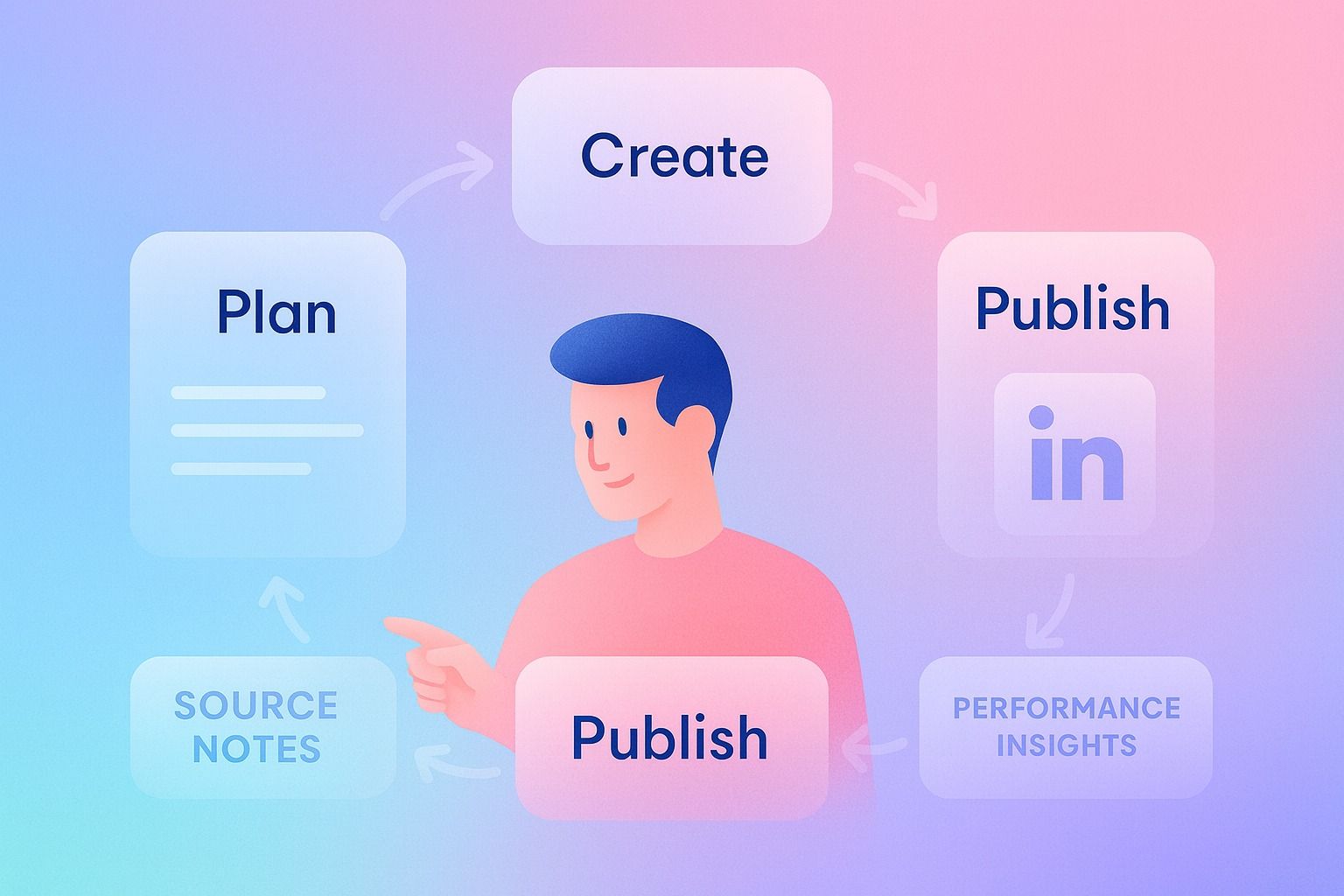
A simple 2026 content operations framework
If you want one model to work from, use this:
Plan
- define goals
- choose audience
- prioritize topics
- set publishing cadence
Create
- use a standard brief
- apply brand context
- draft from source material
Review
- run editorial checks
- collect limited stakeholder input
- approve on deadline
Publish
- schedule with clear ownership
- keep calendar visibility high
- avoid last-minute handoffs
Learn
- review performance
- document patterns
- update planning and process
For LinkedIn-focused teams, this framework aligns well with how an AI LinkedIn agent should support work: helping organize brand context, speed up drafting, maintain review structure, and connect approved content to publishing.
Final thoughts
Content operations is not a side process. It is the operating model that makes content strategy real.
In 2026, the best teams will not win because they produce the most content. They will win because they can move from idea to approved, on-brand publication with less friction and better consistency.
That requires:
- a clear content workflow
- a practical editorial process
- governance that scales across stakeholders
- connected planning and publishing
Dynal supports that direction as an AI LinkedIn agent, especially for teams that want a more structured LinkedIn draft-to-publish workflow. Surfaces like Projects & Publishing help connect creation to scheduling, while Brand DNA helps maintain reusable brand context across the process.
Get started with a cleaner LinkedIn-first setup
If you want to operationalize your workflow instead of managing it across scattered docs and handoffs, start with Dynal’s Onboarding & Setup. The LinkedIn-first connection helps you get to a usable state faster, then you can review and refine your starter brand context before moving into planning, drafting, and publishing.
Start with the LinkedIn-first connection, confirm your Brand DNA, and build a more consistent content operations system from there.