

The ROI of a Strong Personal Brand on LinkedIn
A strong personal brand on LinkedIn can support measurement goals related to business growth, but only if you look beyond vanity metrics.
What to measure first
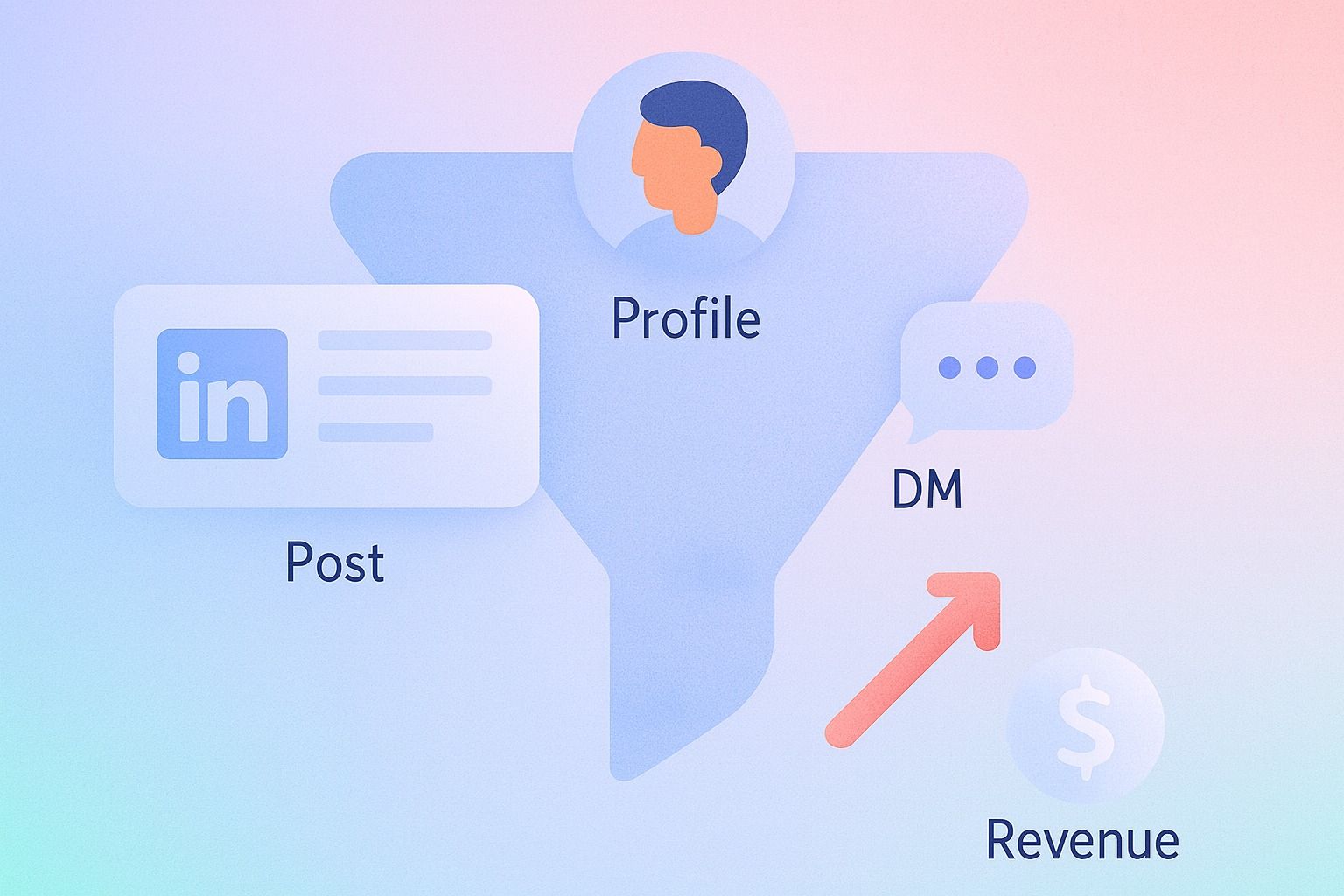
The clearest way to evaluate personal brand ROI is to connect your LinkedIn activity to three outcomes:
- Attention from the right audience
- Inbound conversations
- Revenue influence as a measurement goal, not a guaranteed outcome
Views and likes matter, but they matter most when they lead to profile visits, qualified messages, booked calls, or opportunities that mention your content.
If you want to understand whether your personal brand is working, track the path from post performance to business results, not just the top-line engagement number.
Why consistency matters
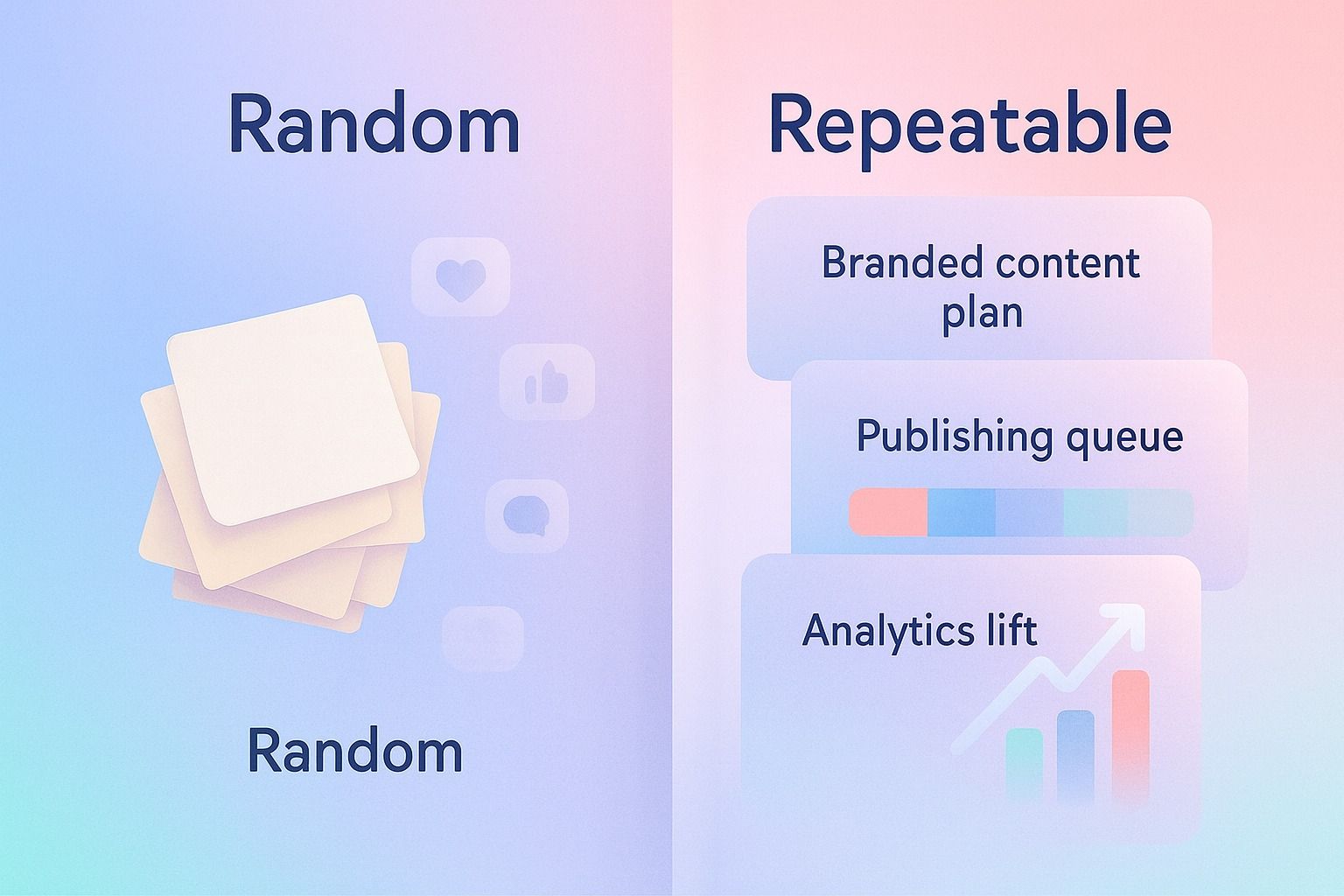
LinkedIn content works best as a repeatable business development channel rather than a random publishing habit.
If you want a more structured workflow for that consistency, Dynal is an AI LinkedIn agent that helps turn ideas into planned, on-brand content. See how it works at Dynal.
Quick summary
- Personal brand ROI starts with audience quality, not raw reach
- The best LinkedIn metrics are the ones that precede inbound conversations
- Consistency usually compounds over months, not days
- Measurement works best when you track content-assisted pipeline, not guess at attribution
What is personal brand ROI?
Personal brand ROI is the business value created by your visibility, credibility, and trust in the market.
On LinkedIn, that value usually shows up as:
- More profile views from relevant buyers, partners, candidates, or referrals
- More inbound DMs, email replies, and connection requests
- Higher conversion rates because prospects already know who you are
- Shorter trust-building cycles in sales conversations
- More speaking, partnership, hiring, or media opportunities
A strong personal brand does not only generate direct last-click revenue. It often improves the efficiency of the broader demand journey.
That is why the right question is not, "Did one post close a deal?" The better question is, "Did consistent LinkedIn presence increase qualified inbound and revenue opportunities over time?"
If consistency is the bottleneck, an AI LinkedIn agent can help you plan, create, and review content with less fragmentation. Explore Dynal to see the workflow.
How do you measure personal brand ROI from LinkedIn activity?

Use a simple funnel:
LinkedIn activity -> audience response -> inbound intent -> pipeline impact -> revenue
Here is a step-by-step process.
Step 1: Define the business outcome first
Before you measure content, decide what business outcome means for you.
Examples:
- A consultant wants more discovery calls
- A founder wants more warm investor or partner conversations
- A coach wants more qualified inbound leads
- A recruiter wants more candidate replies
- An agency wants more demo requests from target accounts
Pick 1 to 3 primary outcomes. If everything is a goal, nothing is measurable.
Step 2: Separate leading metrics from lagging metrics
Most people stop at impressions. That is a mistake.
Leading metrics
These indicate whether your personal brand is earning attention and trust:
- Impressions
- Engagement rate
- Saves
- Shares
- Comments from relevant people
- Profile views
- Follower growth from your target audience
Lagging metrics
These indicate whether your LinkedIn activity is influencing business outcomes:
- Inbound DMs
- Contact form submissions mentioning LinkedIn
- Discovery calls booked
- Qualified opportunities created
- Pipeline value influenced by content
- Closed revenue from LinkedIn-sourced or LinkedIn-assisted leads
A healthy measurement system uses both.
Step 3: Track content-assisted actions
Not every buyer clicks a link in a post. Many people:
- Read a post
- Visit your profile
- Follow you
- Return later
- Send a DM or book a call after several touchpoints
That means you need to track content-assisted conversions, not only direct post clicks.
Useful ways to do this:
- Ask every inbound lead, "How did you hear about us?"
- Add "LinkedIn content" as a source option in forms
- Tag opportunities in your CRM as LinkedIn sourced or LinkedIn influenced
- Save screenshots or notes when prospects reference a post
- Track when profile views and DMs rise after specific topics or posting streaks
Step 4: Review performance patterns, not one-off spikes
Single viral posts can distort the picture.
Look instead at 30-, 60-, and 90-day trends:
- Are profile views increasing?
- Are more qualified people engaging?
- Are more inbound conversations starting without outreach?
- Are opportunities mentioning your content more often?
This is where a lightweight dashboard helps. Dynal's Analytics surface gives teams and professionals a way to review LinkedIn content performance across overview, post, engagement, and audience views. It is best used to spot content patterns and engagement shifts, not as a full-funnel attribution system.
Dynal combines that lightweight analytics view with planning and publishing support, so you can keep the LinkedIn workflow in one place. Learn more at Dynal.
What LinkedIn metrics actually correlate with inbound leads and revenue?
Not all engagement is equal. The metrics that tend to correlate most with inbound business outcomes are the ones closest to intent.
Stronger correlation metrics
- Profile views
A profile visit often means your content created enough interest for someone to check credibility, fit, or offer. - Comments from relevant people
Ten comments from ideal buyers are usually more valuable than 200 likes from a general audience. - Shares and saves
These often signal perceived value. Saved content especially suggests future intent. - Inbound DMs and connection requests
These are among the clearest signs that content is turning into conversation. - Click-throughs to a high-intent destination
For example: booking page, service page, or lead magnet tied to your offer. - Qualified follower growth
A growing audience only matters if it is the right audience.
Weaker standalone metrics
- Raw impressions without profile visits
- Likes without comments or follow-on actions
- Follower growth without audience relevance
- Viral reach outside your market
A simple decision rule
If a metric does not move someone closer to trust, conversation, or conversion, it is probably a context metric, not an ROI metric.
How long does it take for a strong personal brand to support business outcomes?
Usually longer than people hope, but faster than people think if they stay consistent.
A realistic timeline looks like this:
0 to 30 days
You are building signal.
- Sharpening positioning
- Testing topics
- Learning what your audience responds to
- Improving profile-to-post alignment
Possible results:
- Better engagement quality
- More profile views
- Early inbound comments or DMs
30 to 90 days
You start seeing compounding visibility.
- More repeat exposure
- Better recognition in your niche
- Stronger audience fit
- More consistent inbound interest
Possible results:
- More discovery calls
- More content mentions in sales conversations
- More warm introductions
90 to 180+ days
This is where measurement often becomes clearer.
- Trust compounds
- Topic authority becomes more obvious
- Your content starts pre-educating prospects
- Inbound becomes more predictable
Possible results:
- Higher-quality opportunities
- Shorter sales cycles
- Revenue influence as a measurement outcome
The exact timeline depends on:
- Existing audience size
- Clarity of your positioning
- Strength of your offer
- Consistency of posting
- Relevance of your topics
- Ability to convert attention into conversation
How do you calculate the business value of posting on LinkedIn consistently?
Use a practical formula.
Basic personal brand ROI formula
ROI = (Business value generated - Cost of LinkedIn effort) / Cost of LinkedIn effort
Business value generated can include:
- Closed revenue from LinkedIn-sourced deals
- Revenue from LinkedIn-influenced deals
- Estimated value of qualified inbound leads
- Partnership opportunities
- Recruiting savings if candidates come inbound
Cost of LinkedIn effort can include:
- Your time spent creating content
- Team or freelancer support
- Tools used for planning, publishing, or analytics
Example calculation
Let us say over one quarter:
- You spend 20 hours per month on LinkedIn
- Your internal time cost is $150/hour
- Tooling costs $300 for the quarter
- Total cost = $9,300
Results from LinkedIn activity:
- 12 qualified inbound leads
- 4 become sales opportunities
- 2 close for $18,000 total revenue
Now your rough ROI is:
- ($18,000 - $9,300) / $9,300 = 93.5%
That is a clean direct-revenue example. But many brands should also track influenced pipeline, because LinkedIn often supports deals that close through other channels.
A more realistic business value formula
If direct attribution is messy, use this:
Business value = (Qualified inbound leads x lead-to-customer rate x average deal value) + influenced pipeline value
This helps you estimate the value of consistent posting even before every deal is fully attributed.
What is the best way to understand whether LinkedIn content is generating inbound revenue?
Use a proof framework, not a single metric.
The 5-part proof framework
1. Source capture
Ask every lead where they came from.
Good options:
- LinkedIn post
- LinkedIn profile
- Referred after seeing content
- Already followed content before reaching out
2. Content mention tracking
Log exact phrases from prospects such as:
- "I've been seeing your posts"
- "Your LinkedIn content made me reach out"
- "I shared your post internally"
3. CRM tagging
Use simple labels like:
- LinkedIn sourced
- LinkedIn influenced
- Personal brand inbound
4. Time-series comparison
Compare periods before and after consistent posting.
Look for changes in:
- Inbound lead volume
- Lead quality
- Conversion rate
- Sales cycle length
- Average deal size
5. Topic-to-outcome analysis
Track which post themes generate the best business outcomes.
For example:
- Educational posts may drive saves and profile views
- Opinion posts may drive comments and reach
- Client insight posts may drive qualified DMs
This is one of the most useful ways to connect content strategy to business outcomes.
Checklist: how to measure personal brand ROI correctly
Use this checklist if you want a cleaner reporting system.
- Define one primary business outcome
- Track both leading and lagging metrics
- Measure profile views, not just impressions
- Separate qualified engagement from general engagement
- Tag LinkedIn sourced and influenced opportunities
- Ask inbound leads how they found you
- Review 30-, 60-, and 90-day trends
- Compare topics against inbound results
- Calculate time cost, not just software cost
- Report assisted revenue, not only last-click revenue
Common mistakes that make personal brand ROI look lower than it is
Mistake 1: Judging ROI by likes alone
Fix: Measure profile visits, DMs, calls, and opportunities.
Mistake 2: Expecting immediate revenue from a few posts
Fix: Evaluate consistency over at least 90 days.
Mistake 3: Posting without clear positioning
Fix: Align your profile, offer, and content topics.
Mistake 4: Ignoring qualitative evidence
Fix: Save prospect quotes and sales-call mentions.
Mistake 5: Treating every audience member as equally valuable
Fix: Prioritize relevance over reach.
Example template: a simple monthly personal brand ROI report
You can use this structure every month.
Visibility
- Impressions
- Profile views
- Follower growth
- Top-performing topics
Engagement quality
- Comments from target audience
- Saves and shares
- Inbound connection requests
- Inbound DMs
Pipeline impact
- Discovery calls booked
- Qualified leads from LinkedIn
- Opportunities created
- Pipeline value influenced
Revenue impact
- Closed revenue sourced from LinkedIn
- Closed revenue influenced by LinkedIn content
- ROI estimate
Strategic takeaway
- Which content themes should increase?
- Which themes should be reduced?
- What audience response suggests stronger market fit?
Where Dynal fits in this workflow
If you want to improve personal brand ROI, consistency is usually the first bottleneck.
Dynal is an AI LinkedIn agent built for that workflow: shaping content around your Brand DNA, organizing a posting plan, helping you publish or schedule LinkedIn content, and reviewing performance in Analytics.
That matters because ROI is hard to evaluate when content creation is inconsistent, topic selection is random, and performance review happens too late.
A more structured workflow can help you:
- Keep messaging aligned to your brand context system
- Maintain a regular posting cadence
- Review post performance in one place
- Identify which content patterns deserve more repetition
Use Dynal's Analytics as a lightweight LinkedIn content analytics layer for reviewing overview, post, engagement, and audience trends. Use it to inform better decisions, while keeping your CRM and lead-source process as the main proof system for revenue.
Final decision criteria: when personal brand investment is worth it
Invest more in LinkedIn personal brand building if:
- Trust matters before purchase
- Your buyers research people, not just companies
- Expertise is part of your sales process
- Inbound referrals and reputation affect growth
- You have strong insight but weak market visibility
Invest less aggressively if:
- Your offer has no clear target audience
- You cannot support follow-up when inbound appears
- Your profile and offer are misaligned
- You are unwilling to stay consistent long enough to measure compounding results
Bottom line
A strong personal brand on LinkedIn can create ROI when it turns expertise into repeatable trust, and repeatable trust into inbound business outcomes.
The most reliable way to evaluate that ROI is to track the path from content performance to conversation to pipeline to revenue. Focus less on vanity metrics, more on qualified attention and business outcomes.
If you want a more structured starting point, go through Dynal's Onboarding flow and use the LinkedIn-first setup to build stronger brand context from the beginning. That gives your AI LinkedIn agent a better foundation for planning, creating, publishing, and reviewing content with more consistency.