

The Stakeholder Problem: How to Get Approvals Without Endless Rewrites
If content approvals keep turning into endless rewrites, the problem usually is not the draft. It is the process before the draft.

The fastest LinkedIn teams do not wait until a post is written to align stakeholders. They set approval roles, define what kind of feedback is allowed, agree on the target audience and message, and review against a clear brief. That is how you reduce content feedback cycles and make editorial review move faster.
If your team wants that kind of structure in a LinkedIn workflow, Dynal is an AI LinkedIn agent that helps keep brand context and publishing in the same flow. It is useful when you want less fragmentation between drafting, review, and scheduling.
For LinkedIn content, this matters even more. A post can look "good" to five different stakeholders and still fail because nobody agreed on voice, audience, or boundaries upfront. A better stakeholder management process fixes that before writing starts.
In practice, the goal is simple: fewer opinions, clearer approvals, faster publishing.
- Align stakeholders before drafting, not after.
- Separate strategic feedback from copy edits.
- Use one owner to consolidate content feedback.
- Review against agreed criteria, not personal preference.
Why content approvals break down
Most content approvals become slow for the same reasons:
- Too many reviewers have equal authority. Everyone comments, but no one owns the final call.
- The brief is vague. Stakeholders react to wording because the message was never aligned.
- Editorial review happens too late. Major positioning issues surface only after a full draft exists.
- Feedback conflicts. One person wants bold, another wants safe, and a third wants more detail.
- Approval criteria are unclear. Teams ask, "Do you like it?" instead of, "Does this meet the brief?"
If you recognize those patterns, you do not need more rewrite stamina. You need a cleaner approval system.
How do you get content approvals without endless rewrites from stakeholders?
Start by moving alignment earlier.
Before anyone writes, get agreement on these five points:
- Audience: Who is this for?
- Goal: What should the post achieve?
- Core message: What is the one takeaway?
- Voice and tone: How should it sound?
- Boundaries: What should the content avoid?
When those are settled first, reviewers spend less time rewriting and more time checking whether the content matches the plan.
A simple rule
Stakeholders should approve the direction before they approve the draft.
For teams building that approval step into their process, an AI LinkedIn agent can help keep the brief, draft, and publish path aligned. Dynal is built for LinkedIn-first workflows, so stakeholders are reacting to clearer context instead of scattered versions.
That one shift cuts a large share of avoidable rewrites.
The best stakeholder management process for editorial review
A strong editorial review process is not complicated. It just needs clear stages.
A step-by-step process for faster content approvals
Step 1: Assign one final owner
Choose one person to own the post from draft to publish. This is usually the content lead, communications lead, founder, or marketing manager.
Their job is to:
- collect stakeholder input
- resolve conflicting content feedback
- decide what changes matter
- move the post into final approval
Without a single owner, every review round becomes negotiation.
Step 2: Define reviewer roles before drafting
Not every stakeholder should review everything.
Use a simple model:
- Approver: can approve or reject
- Contributor: can suggest factual or strategic input
- Editor: improves clarity, structure, and style
- Observer: stays informed but does not change the draft
This is one of the best ways to improve stakeholder management in editorial review.
Step 3: Create a pre-draft alignment brief
Before drafting, circulate a short approval brief.
Include:
- topic
- target audience
- goal
- key message
- supporting proof points
- desired tone
- topics to avoid
- deadline and approval date
This is where many teams can benefit from a structured brand context system. Brand DNA is Dynal’s configurable brand context layer for LinkedIn content. It helps teams organize voice, audience, and boundaries before writing so review conversations stay focused on the brief rather than personal preference.
That does not replace human review. It gives the review process more shared context.
Step 4: Ask for the right feedback at the right stage
Different stages need different feedback.
Before drafting:
- Is this the right topic?
- Is the audience correct?
- Is the point of view aligned?
- Are there any boundaries or sensitivities?
After first draft:
- Does this reflect the agreed message?
- Is anything inaccurate or unclear?
- Does the voice fit?
Before publishing:
- Is it approved to publish?
- Are links, names, and claims correct?
- Is timing right?
If you ask for line edits too early, stakeholders rewrite instead of guide.
Step 5: Consolidate content feedback into one document or thread
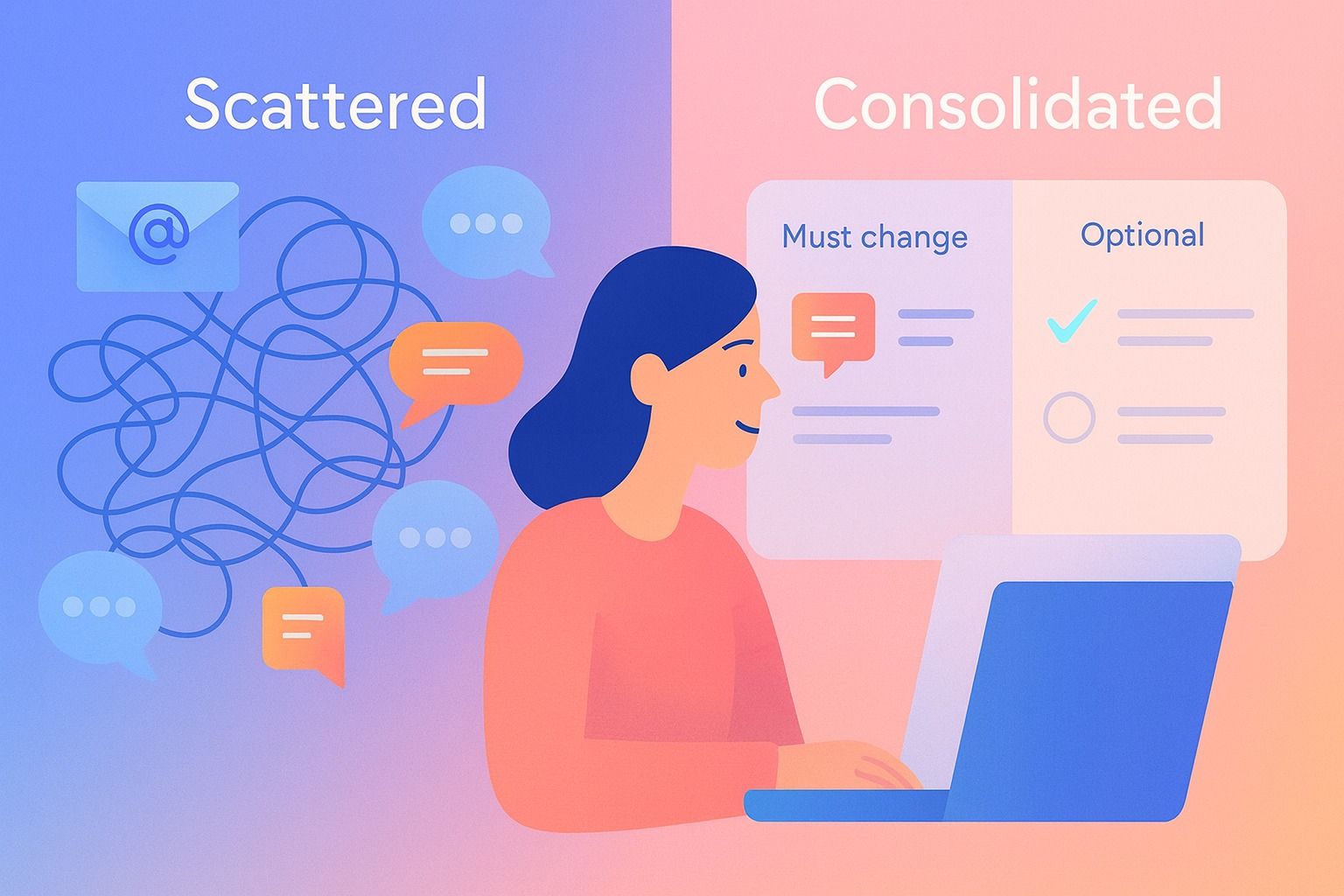
Do not let stakeholders leave comments across email, chat, docs, and meetings.
Use one review location and one final summary of required changes.
A useful format is:
- Must change
- Nice to have
- Out of scope for this post
This helps the owner turn scattered comments into a usable editorial review decision.
Step 6: Publish against a schedule
Approvals drag when there is no publishing window. A deadline forces clarity.
For LinkedIn workflows, using a planned path from draft to schedule helps teams stop treating every post like an open-ended document. Dynal's Projects & Publishing surface is built around that draft-to-publish workflow for LinkedIn content, so selected content can move from review into publish or schedule actions from the same creation flow.
How can I reduce content feedback cycles before drafting starts?
The biggest gains happen before anyone writes a word.
Pre-draft checklist to reduce rewrites
Use this checklist before drafting starts:
- Has one owner been assigned?
- Are approvers clearly named?
- Is the audience defined?
- Is the objective explicit?
- Is the main message approved?
- Are examples or source material included?
- Is voice agreed?
- Are topic guardrails clear?
- Is the deadline fixed?
- Does everyone know what kind of feedback is expected?
If two or more of these are missing, expect extra rewrite rounds.
What rules should I set to avoid conflicting content feedback from multiple stakeholders?
Set rules before the first review round. Not after conflict appears.
Ground rules for content approvals
1. One approver, many inputs
Many people can contribute. One person approves.
2. Feedback must map to the brief
Comments should tie back to audience, goal, message, voice, or accuracy.
Bad feedback:
- "I just do not like this opening."
Better feedback:
- "The opening does not match the executive audience we agreed on."
3. No drive-by rewrites without rationale
Reviewers should explain why a change is needed.
4. Resolve conflicts offline, then return one decision
Do not make the writer sort out internal politics in comments.
5. Set a review deadline
Late feedback creates extra rounds. If someone misses the review window, the owner decides whether that input waits for the next post.
6. Limit each stakeholder to their area
Legal checks legal risk. Product checks accuracy. Brand checks voice. Leadership checks strategic fit.
When everyone edits everything, approvals stall.
Examples of better approval systems
Example 1: Founder-led LinkedIn content
Problem: The founder, head of marketing, and sales leader all rewrite posts from different angles.
Fix:
- Founder approves final message
- Marketing owns the draft
- Sales contributes customer language before drafting
- Everyone reviews from the brief, not preference
Result: Fewer revision rounds and clearer ownership.
Example 2: Team thought leadership calendar
Problem: Every LinkedIn post goes through a full editorial review, even when the topic is already approved.
Fix:
- approve monthly themes first
- approve post outlines next
- reserve final review for factual and brand checks only
Result: Faster content approvals because strategic alignment happens earlier.
Example 3: Agency-client workflow
Problem: The client sends scattered content feedback after each draft.
Fix:
- use one approval form
- require one consolidated response from the client
- mark each comment as must-change or optional
Result: Cleaner stakeholder management and fewer contradictory edits.
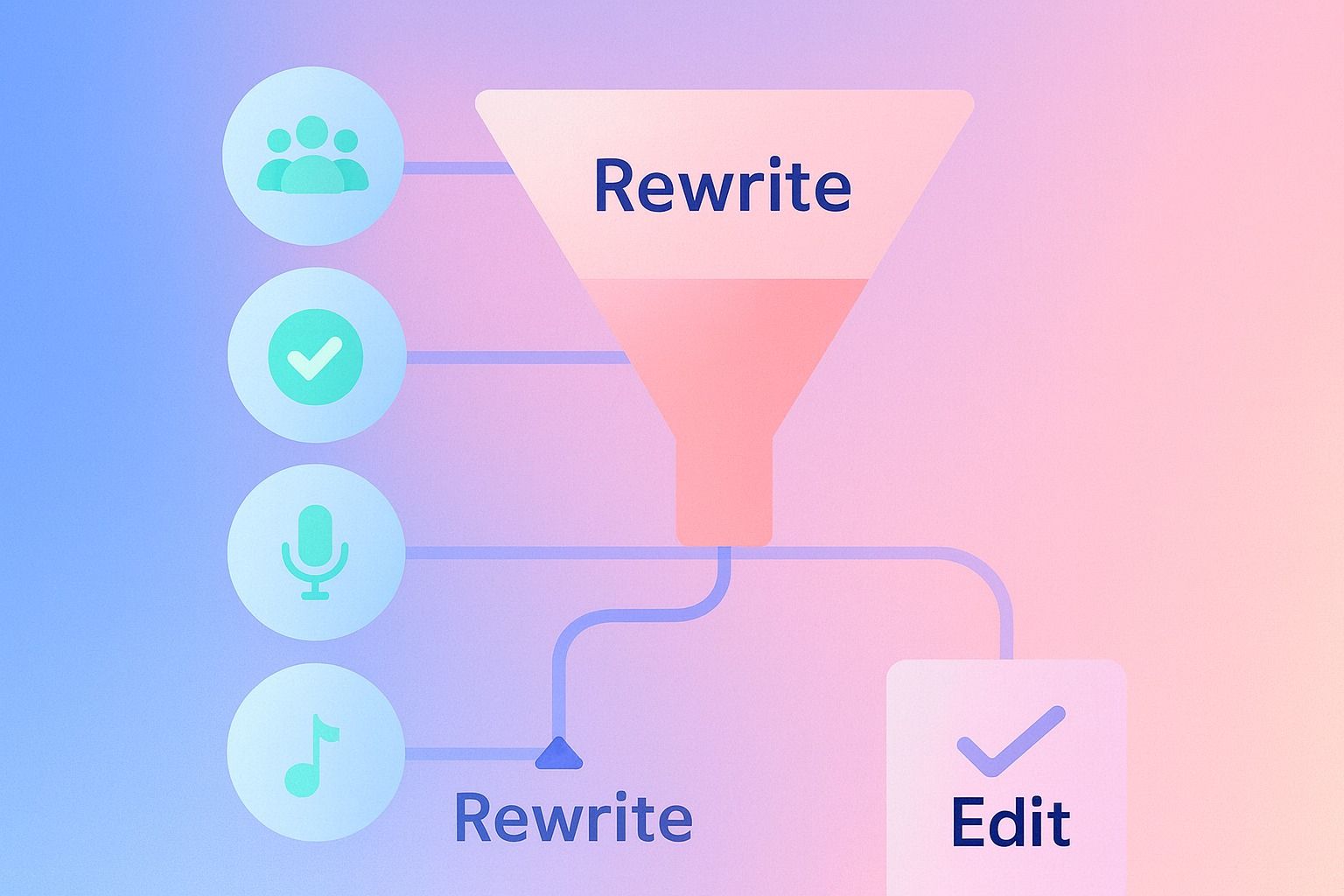
Decision criteria: what should actually trigger a rewrite?
Not every comment deserves a new draft.
A rewrite is usually justified only if one of these is true:
- the audience is wrong
- the core message is off
- facts are inaccurate
- the voice is clearly misaligned
- the content crosses agreed boundaries
- the post no longer supports the objective
If the feedback is only stylistic preference, it usually belongs in light editing, not a full rewrite.
This single decision filter can save teams hours every week.
Common mistakes in editorial review and how to fix them
Mistake 1: Asking everyone to comment at once
Fix: Review in sequence. Strategic stakeholders first, editors second, final approver last.
Mistake 2: Starting from a full draft without pre-approval
Fix: Get sign-off on the brief or outline first.
Mistake 3: Treating all feedback as equal
Fix: Prioritize by role and decision rights.
Mistake 4: Letting comments stay vague
Fix: Require comments to reference audience, goal, message, voice, or accuracy.
Mistake 5: No shared standard for voice
Fix: Document voice expectations before writing. For LinkedIn teams, this is exactly where a structured setup helps more than scattered Slack opinions.
How do teams align on content approvals before writing so reviews move faster?
They align on the inputs, not just the output.
A practical pre-writing alignment meeting can be 15 minutes and should answer:
- Who is this for?
- What outcome do we want?
- What is the point of view?
- What proof or examples must be included?
- What should we avoid?
- Who gives final approval?
- When does review close?
That is enough to make drafting faster and editorial review more focused.
A lightweight template you can use today
Copy this into your next content approval workflow:
Content approval brief
- Topic:
- Audience:
- Goal:
- Main takeaway:
- Proof points or sources:
- Voice and tone:
- Topics to avoid:
- Approver:
- Contributors:
- Deadline for feedback:
- Definition of approval:
Review rules
- Feedback must map to the brief.
- One owner consolidates all comments.
- Conflicts are resolved outside the draft.
- Only the approver can request major rewrites.
Where Dynal fits in
Dynal is an AI LinkedIn agent, not just a one-off writing tool. For teams dealing with repeated approval loops, the value is not magic automation. It is having a more structured LinkedIn workflow from context to creation to review to publishing.
In practical terms, teams can use Dynal to:
- shape LinkedIn content with Brand DNA
- draft in a chat-based creation flow
- keep work organized in projects
- move selected content into Projects & Publishing for publish-now or schedule-later decisions
That structure supports better content approvals because stakeholders are reacting to a clearer system, not random drafts floating across tools.
Final takeaway
If your team wants fewer rewrites, do not start by policing drafts harder. Start by fixing stakeholder management.
Clear roles, pre-draft alignment, better editorial review rules, and one approval owner will reduce content feedback faster than any line-editing process ever will.
And if you want a more structured LinkedIn workflow, start with Onboarding & Setup in Dynal. The LinkedIn-first setup can help you build starter brand context before drafting, reviewing, and publishing.
The result is simple: better alignment before writing, smoother content approvals after writing, and fewer endless rewrite loops.