

If your content looks and sounds like everyone else’s, publishing more of it will not fix the problem.
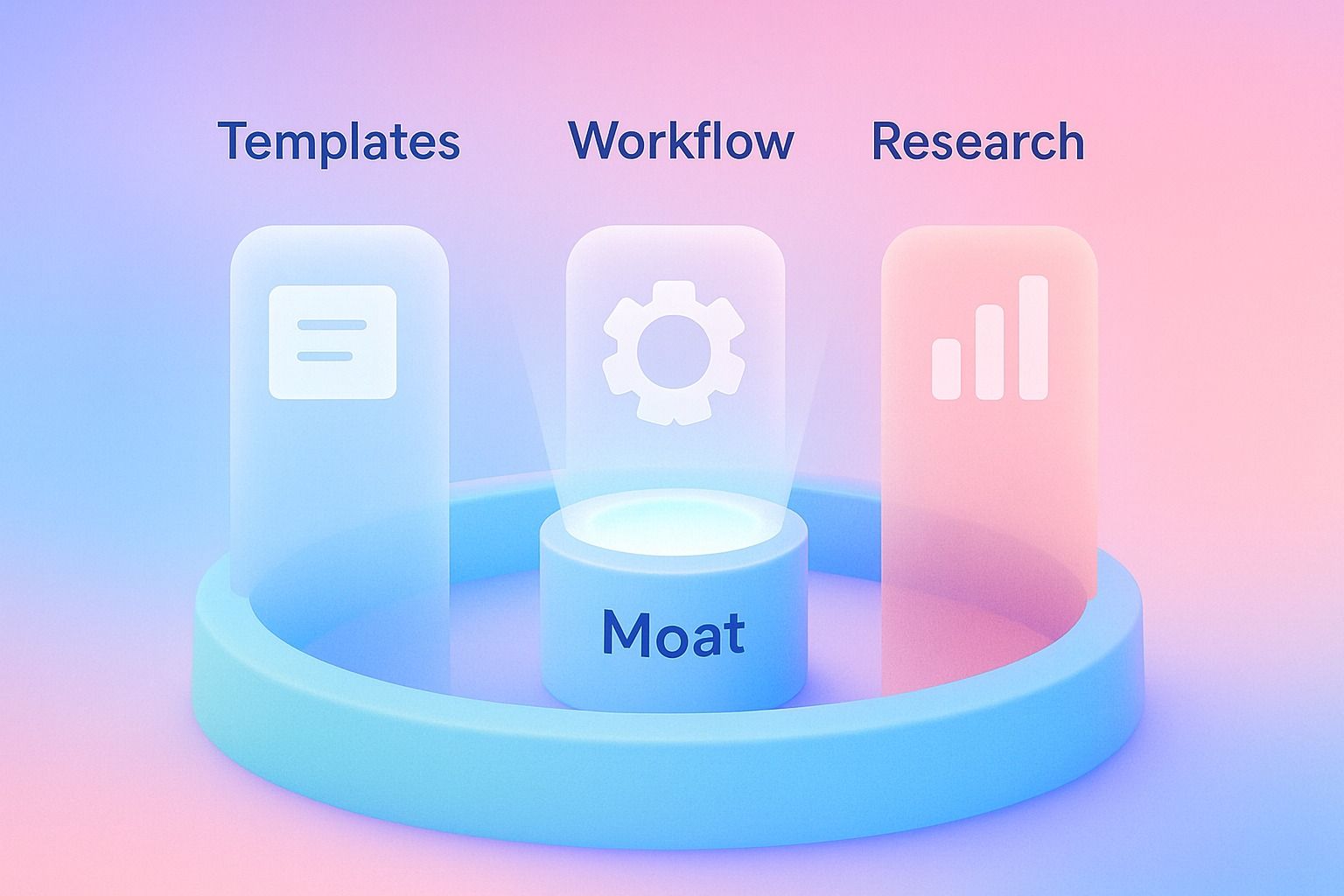
A real content moat is not “more SEO content.” It is a repeatable system for producing differentiated content from your own expertise. In practice, that usually comes from three assets working together: templates, workflows, and original research.
Templates make your ideas reusable. Workflows make your publishing consistent. Research makes your content worth citing. Put together, they create content other teams cannot easily copy—even if they use the same AI tools.
If you want an AI LinkedIn agent to help turn those inputs into a repeatable LinkedIn workflow, see Dynal. It’s built to support source-driven creation, planning, and publishing around your brand context.
If you want content that is more reusable, more credible, and less generic, start there.
In this guide
- What a content moat is and how to build one
- How templates and workflows create differentiated content
- What counts as original research in content marketing
- How to make content more reusable and more likely to get cited
- How to avoid generic AI content that sounds like everyone else
What is a content moat?
A content moat is the set of assets, processes, and insights that make your content hard to imitate.
It is called a moat because it protects you from commoditization. If your content strategy relies only on generic keyword briefs and broadly available AI outputs, competitors can publish near-identical articles in the same week. If your content is built on proprietary patterns—your templates, your workflow, your point of view, your customer language, your research—it becomes much harder to replicate.
A strong content moat usually includes:
- A distinct point of view on the topic
- Reusable templates that package expertise consistently
- Workflows that turn ideas into repeatable outputs
- Original research or firsthand evidence
- Source material from real conversations, projects, and observations
If your team is trying to avoid generic output, it can help to use an AI LinkedIn agent that starts with your brand context and source material. Dynal is designed for that kind of LinkedIn-first workflow.
The key idea: differentiation is rarely a single brilliant article. It is usually a system.
Why generic SEO breaks down
Generic SEO content tends to have three problems:
- It repeats what is already ranking
- It says correct but obvious things
- It is difficult to reuse in other formats
That is why so much AI-assisted content underperforms. The issue is not AI itself. It is using AI without unique inputs, clear structure, or a defined content workflow.
If your prompt could be used by any company in your category, the output will likely be swappable too.
The three-part content moat: templates + workflows + research
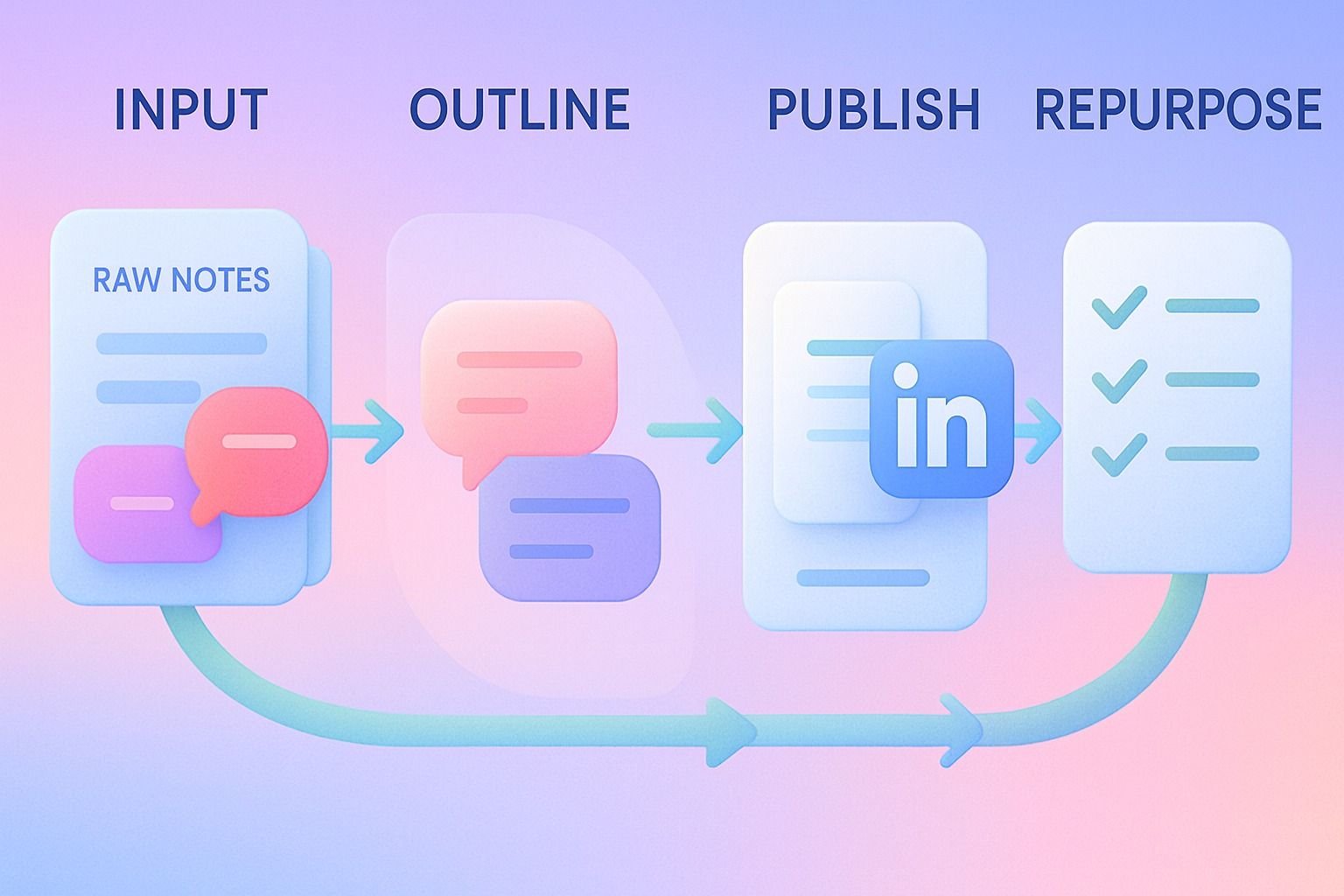
Think of these as three layers.
1. Templates turn expertise into repeatable assets
Templates are not shortcuts for low-effort content. Good templates are containers for judgment.
They help you package recurring ideas in a way that is:
- Faster to produce
- Easier to maintain
- More consistent across formats
- More useful to readers
Examples of high-value content templates:
- Framework breakdowns
- Teardown articles
- Comparison pages
- Checklists
- LinkedIn post structures
- Case study outlines
- Research summary formats
- FAQ blocks built from sales or customer questions
A template becomes part of your moat when it reflects how you think, not just a generic blog structure.
2. Workflows create consistency and compounding
A workflow is the sequence you use to move from idea to published asset.
For example:
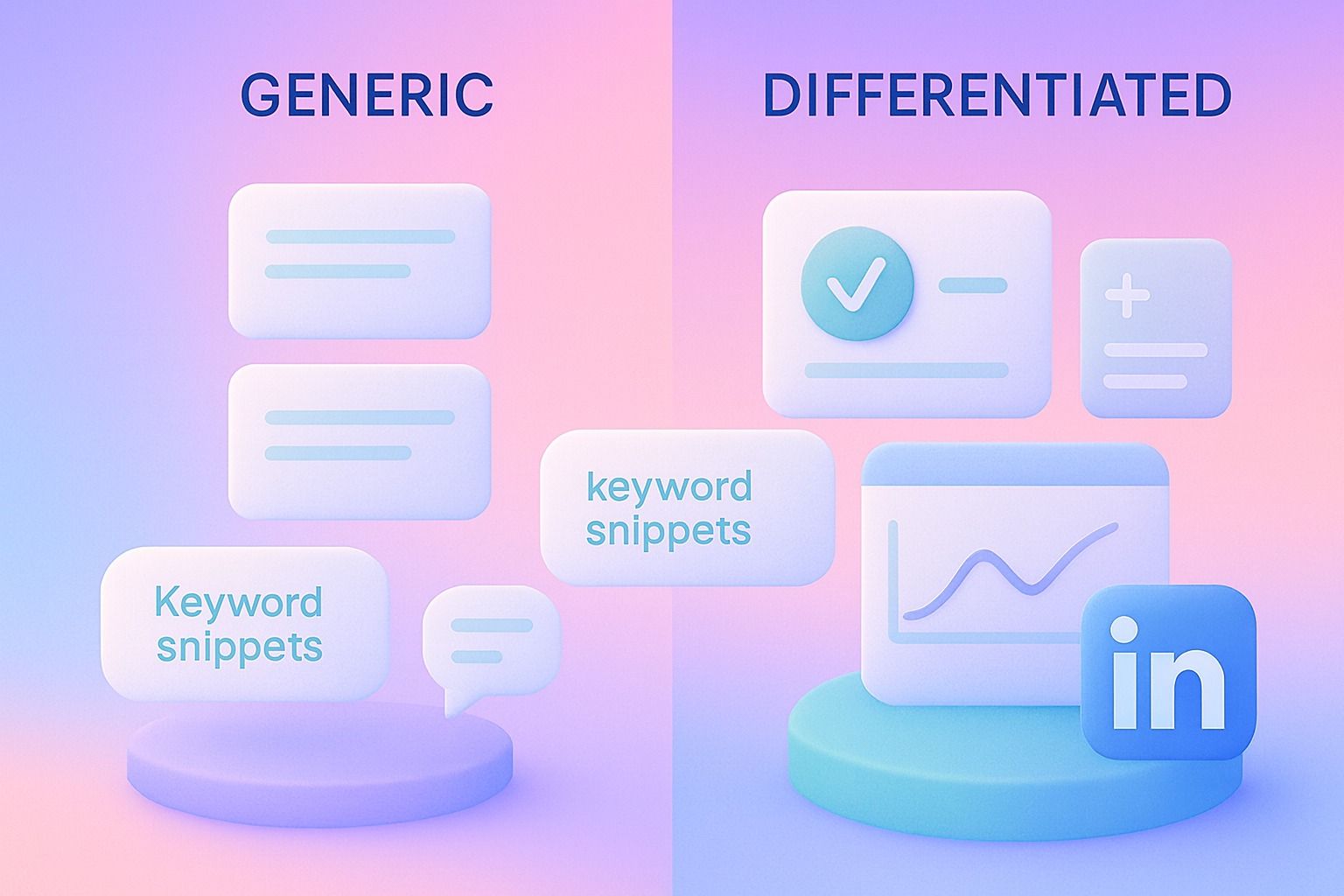
- Collect raw inputs from calls, emails, internal notes, and source URLs
- Extract recurring themes and objections
- Turn those into a structured outline
- Add examples, evidence, and a point of view
- Publish the long-form version
- Repackage it into LinkedIn posts, checklists, and short-form summaries
- Review performance and refine the next batch
This is where many teams miss the opportunity. That’s exactly the gap an AI LinkedIn agent can help close. With Dynal, you can keep the creation flow centered on LinkedIn while turning one strong input into reusable drafts and planned outputs.
They create one article at a time instead of building a LinkedIn content creation workspace that supports reuse.
3. Original research gives content earning power
Original research is what makes people cite you instead of just reading you.
It does not have to mean a massive annual industry report. In content marketing, original research can include:
- A survey you ran
- Aggregated findings from customer interviews
- A benchmark built from your own dataset
- Before-and-after results from internal tests
- A systematic review of a sample set
- Pattern analysis from repeated client work
- A curated dataset assembled from public sources with clear methodology
What matters is that you contribute something new: data, synthesis, categorization, or evidence.
How to build a content moat step by step
Here is a practical process.
Step 1: Inventory your non-generic inputs
Before you write anything, list the inputs competitors do not have.
Use this checklist:
- Customer questions you hear repeatedly
- Sales call objections
- Internal frameworks or methods
- Team opinions based on hands-on experience
- Metrics or observations from your own work
- Niche examples others are not covering
- Saved source URLs, notes, documents, or transcripts
If you cannot identify unique inputs, that is your first problem—not your writing tool.
Step 2: Build 3 to 5 repeatable templates
Do not create a new structure from scratch for every article.
Start with a small template library such as:
- Definition template: what it is, why it matters, examples, common mistakes
- Decision template: when to use X vs. Y, tradeoffs, buying criteria
- Process template: step-by-step workflow with checklist and examples
- Research template: methodology, findings, interpretation, implications
- Teardown template: what worked, what did not, what to copy, what to avoid
These structures make content easier to scale without making it sound robotic.
Step 3: Turn content creation into a workflow, not a one-off task
A moat gets stronger when one input powers multiple outputs.
For example, one research-backed article can become:
- A LinkedIn post series
- A checklist PDF
- A comparison page
- A webinar outline
- A sales enablement asset
- A newsletter issue
This is where a tool should support flow, not just generation. In Dynal, the Workspace & Chat surface is a chat-centered creation flow where you can work from prompts and source material, shape drafts, and move selected content toward publishing. That matters when your goal is not just drafting faster, but creating a reusable system around LinkedIn content.
Dynal should still be understood correctly here: it is an AI LinkedIn agent, not a generic writing tool and not a full omnichannel content suite.
Step 4: Add a research layer to priority topics
You do not need original research for every keyword. You do need it for the topics where you want durable advantage.
Choose topics that are:
- Commercially important
- Frequently discussed in your category
- Full of recycled advice
- Closely tied to your actual expertise
Then add one of these research angles:
- Mini-survey
- Internal benchmark
- Expert roundup with synthesis
- Structured analysis of 25 to 100 examples
- Aggregated patterns from your own projects
Step 5: Create citation-friendly assets inside the piece
People cite specifics, not generalities.
To make content more likely to be referenced, include:
- Clear frameworks with named stages
- Original charts or categorized findings
- Definitions people can quote
- Benchmark tables
- Numbered processes
- Short, memorable templates
- Contrarian but defensible observations
If your article can be summarized only as “here are some best practices,” it is less likely to earn citations.
What counts as original research in content marketing?
A lot more than most teams assume.
Original research does not have to mean university-style research or expensive panel studies. In content marketing, it usually means one of four things:
1. You collected new data
Examples:
- Surveying 150 operators about their workflow
- Reviewing 200 LinkedIn posts for recurring hooks
- Measuring performance across your own content samples
2. You created a new categorization
Examples:
- Grouping landing pages into 5 conversion patterns
- Defining 4 common failure modes in AI-assisted SEO content
- Building a maturity model for content operations
3. You synthesized scattered evidence better than others
Examples:
- Pulling together public sources into a usable benchmark
- Summarizing many expert opinions into a practical model
- Comparing frameworks and showing where each breaks down
4. You documented firsthand experience clearly
Examples:
- What changed after revising your workflow
- Which template outperformed another in your own use
- Which content formats were easiest to repurpose into LinkedIn posts
Original does not always mean statistically groundbreaking. It often means clearly observed, carefully structured, and genuinely useful.
How templates and workflows create differentiated content
Templates and workflows create differentiated content because they preserve your thinking.
Without them, each draft starts from zero. That usually leads to:
- Inconsistent quality
- Generic introductions
- Repeated research work
- Weak reuse across channels
- More editorial drift
With them, you can standardize what should be standard and reserve human effort for what should stay human: interpretation, examples, and judgment.
A simple example
Let’s say your topic is “original research in B2B content.”
A generic approach:
- Search top-ranking articles
- Summarize the same advice
- Add a few AI-generated examples
- Publish and move on
A differentiated approach:
- Start with your internal framework for research content
- Add notes from actual customer conversations
- Include a categorized review of 30 published examples
- Turn findings into a checklist template
- Repurpose the article into a LinkedIn post sequence
Both pieces target the keyword. Only one creates a moat.
Templates you can use right now
Here are four simple templates to make content more reusable and more citeable.
Template 1: The framework article
Use when you want to define a concept and own the explanation.
Structure:
- What it is
- Why it matters
- The framework
- Examples
- Common mistakes
- Implementation checklist
Why it works: readers can quote the framework and reuse it internally.
Template 2: The research-backed checklist
Use when the topic is crowded and you need a practical edge.
Structure:
- Problem definition
- What we reviewed or observed
- Key patterns
- Checklist
- What good looks like
- What to avoid
Why it works: checklists are highly reusable and easy to cite in newsletters, presentations, and posts.
Template 3: The comparison page with decision criteria
Use when readers are evaluating options.
Structure:
- Best fit for each option
- Similarities
- Differences
- Decision criteria
- Common mistakes
- Final recommendation by use case
Why it works: comparison content earns links and helps buyers make decisions faster.
Template 4: The “from article to LinkedIn” workflow
Use when you want every article to support distribution.
Structure:
- Core thesis
- Three sub-arguments
- One proof point for each
- Five post angles
- One contrarian takeaway
- One checklist or visual summary
Why it works: every long-form piece leaves behind assets you can reuse in LinkedIn publishing.
Common mistakes that make content generic
Here are the most common mistakes, plus how to fix them.
Mistake 1: Treating AI as the strategy
Problem: Teams ask AI to produce the content and hope differentiation appears in the draft.
Fix: Use AI after gathering unique inputs, not before.
Mistake 2: Publishing only keyword summaries
Problem: The article is accurate but adds nothing new.
Fix: Add original categorization, examples, internal evidence, or research.
Mistake 3: No reusable structure
Problem: Every article is reinvented from scratch.
Fix: Create a small library of templates tied to your best-performing content types.
Mistake 4: No workflow for repurposing
Problem: A strong article gets published once and forgotten.
Fix: Build a standard workflow that turns each article into posts, summaries, and derivative assets.
Mistake 5: Weak source inputs
Problem: You ask for expert content without supplying expertise.
Fix: Feed in notes, links, examples, and research before drafting.
Decision criteria: what to invest in first
If you are building a content moat from scratch, prioritize in this order:
- Source quality — real insights, examples, and evidence
- Templates — repeatable ways to package your thinking
- Workflow — a consistent path from idea to publishable assets
- Research layer — proof and differentiation on high-value topics
- Distribution system — repurposing into LinkedIn and other owned formats
Why this order works: better inputs improve every output. Research helps, but without templates and workflows, it stays trapped in one asset.
How to avoid generic AI content that sounds like everyone else
Use this quick test before publishing.
Ask:
- Does this include an idea, example, or structure that came from us?
- Would a competitor with the same prompt write something very similar?
- Is there a named framework, checklist, or decision model here?
- Is there any evidence beyond commonly repeated advice?
- Can this piece be repurposed into multiple LinkedIn posts without sounding repetitive?
If the answer is “no” to most of these, you likely have a generic draft.
One practical way to improve this is to create with brand context and source material together. In Dynal, that means using the chat-based creation flow with structured inputs, then shaping drafts for your LinkedIn presence rather than prompting in isolation. Keep the positioning precise: Dynal is an AI LinkedIn agent with a LinkedIn content creation workspace and publish flow for LinkedIn, not just a standalone chatbot.
Final checklist: building your content moat
Before you publish your next piece, make sure you have:
- A specific point of view
- At least one reusable template
- A documented content workflow
- Original inputs or research
- Citation-friendly takeaways
- A repurposing plan for LinkedIn
That is what makes content durable.
Not volume alone. Not “SEO content” alone. And definitely not generic AI text.
The bottom line
Your content moat is the system behind your content.
Templates help you package ideas. Workflows help you repeat quality. Original research helps you earn attention and citations. Together, they create differentiated content that is harder to copy and easier to reuse.
If you want to operationalize that on LinkedIn, start with a setup that gives your agent stronger context from day one. Dynal’s Onboarding & Setup is designed to get you into a usable flow quickly, with a LinkedIn-first connection that helps you establish starter brand context before you move into creation, planning, and publishing.
If you are ready to build a more repeatable LinkedIn content system, start there.